Before your next proposal goes out, try to answer one question in a single sentence: why should this customer spend money with you, rather than with a competitor or not at all?
That sentence is your value proposition. In the APMP Body of Knowledge, a value proposition is a customer-specific statement of how your offer improves this customer's business, and how both sides will measure that improvement. It sets the value basis for the relationship. Done well, it tells the customer what they gain, how they will know they gained it, and why you are the one to deliver it.
This is episode 4 of our walk through the APMP Foundation Study Guide. We are still in the Focus on the Customer domain. EP01 covered compliance and responsiveness. This episode is about the competency that turns your understanding of the customer into a reason to buy: Value Propositions.

What a value proposition is
Stripped down, the Body of Knowledge definition has three parts. A value proposition offers the customer something they want, explains how that value will show up in their organization, and gives them a solid reason to pick you instead of the alternatives. It is always specific to one customer and one opportunity. A sentence you could paste into any proposal is not a value proposition.
A practical way to test a draft is to check that it answers three questions:
- What value does the solution create for the customer's business?
- How will that value be measured?
- Why should the customer get it from you rather than a competitor?
Take a system operations contract. The what might be lower operating cost. The how might be automatic recovery from any outage within one minute, tracked in the service report. The why might be a dedicated on-site team that already knows the customer's environment. Three short answers, and the customer has something concrete to weigh.
The Study Guide also separates two kinds of value:
| Tangible value | Intangible value | |
|---|---|---|
| How it is measured | In numbers (quantitatively) | In qualities (qualitatively) |
| Typical examples | Cost saved, hours freed, revenue gained, error rate reduced | Lower risk, better reputation, staff morale, citizen trust |
| How to present it | A figure with a timeframe and a way to track it | A clear description, ideally backed by evidence or a visual |
Good value propositions often carry both. The numbers make the case, and the intangible benefits make it feel worth doing.
The common trap: talking about yourself
The most frequent failure isn't a missing value proposition. It is a paragraph that sounds like one but is really about the bidder: company history, a list of specifications, "industry-leading" and "world-class", the same message repeated in every section, and a closing line thanking the evaluators for their consideration. None of it tells the customer what changes for them.
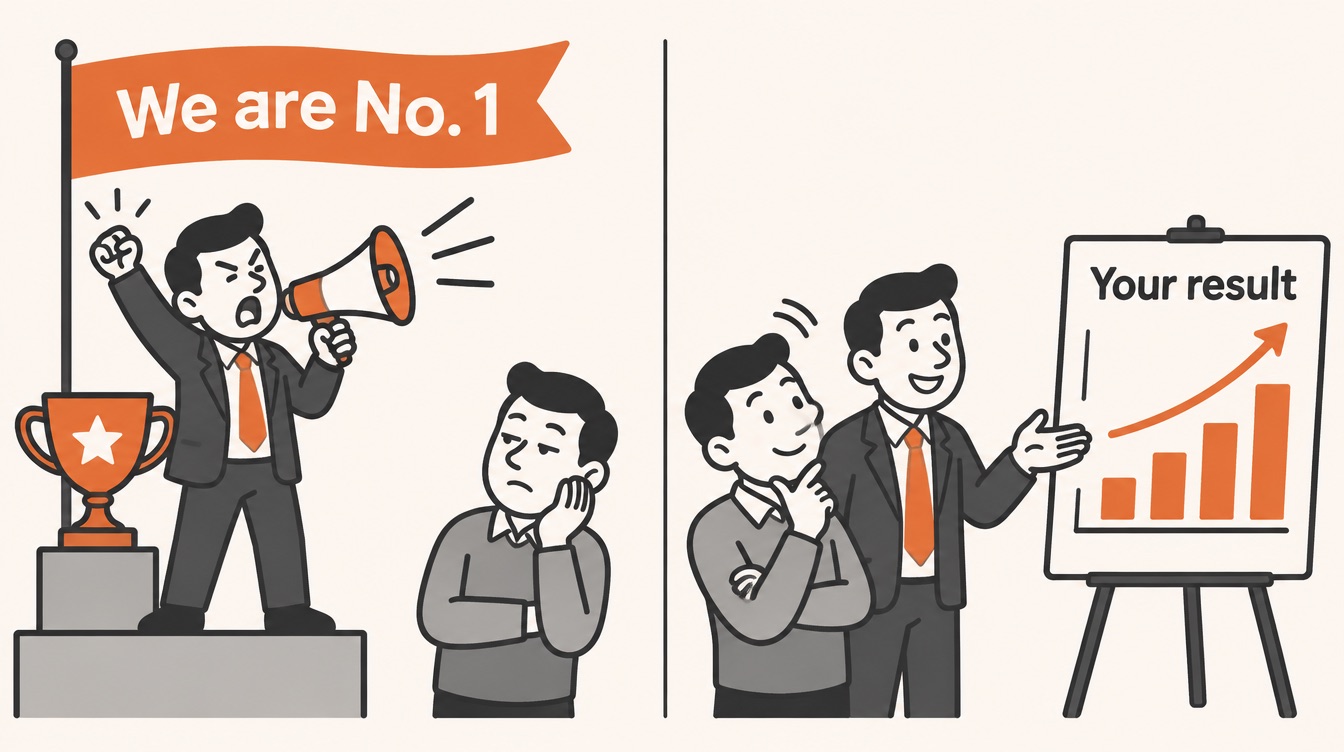
Here is the same offer written both ways, for a help desk modernization bid:
About the bidder
"As a global leader with 20 years of experience and more than 300 deployments, we deliver a best-in-class service platform that will transform your operations."
No number the customer cares about, no timeframe, no way to check it.
About the customer
"Within three months of go-live, your service desk staff will spend about eight fewer hours a week routing tickets by hand, measured from your own monthly ticket report. Agencies of similar size using the same setup cut first-response time by 25–30% in their first year."
A benefit, a timeframe, a measure, and a proof point.
In my experience, strong global firms rarely lead with "we are the best". They lead with what the customer gains and why they are the one to deliver it. The experience and the deployments still belong in the proposal, as evidence for the claim, not as the claim.
More than a theme: the five elements
EP01 ended with theme statements, which tie a customer need to your solution and its benefit. The Body of Knowledge says a value proposition goes further by adding the economics. Where the opportunity allows, include as many of these five elements as you can:
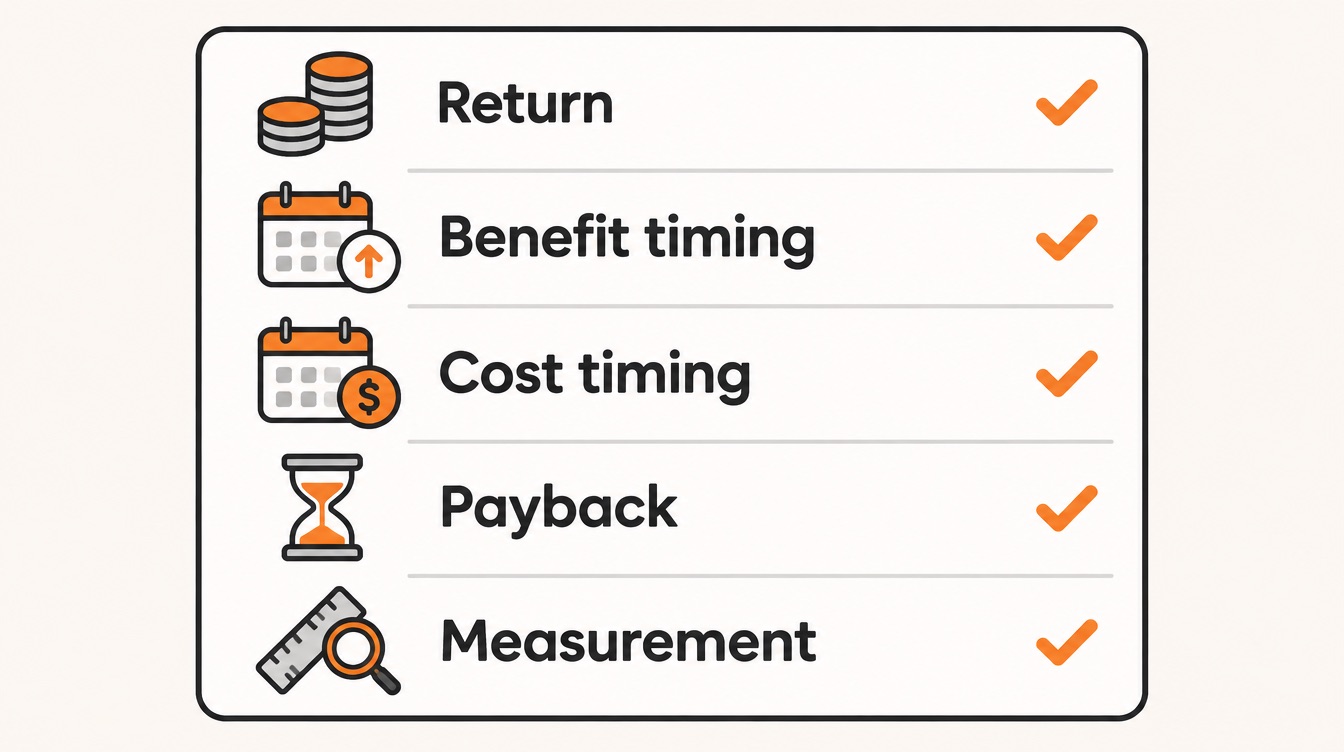
| Element | The customer's question | Example phrasing |
|---|---|---|
| Estimated return | What do we get for this investment? | "About $180,000 in reduced overtime per year" |
| Timing of benefits | When do we start seeing it? | "From the second month after go-live" |
| Timing of costs | When do we have to pay, and how much? | "Setup in Q1, then a fixed monthly fee" |
| Payback period | When are we even? | "Pays for itself within ten months" |
| Measurement | How will we know it worked? | "Tracked monthly in a shared dashboard against today's baseline" |
These elements matter because the people who read your proposal usually have to justify the purchase to someone else. A value proposition with a return, dates and a measure is something they can lift straight into their own internal approval memo. Without numbers, the customer can like your proposal and still be unable to move it forward. Customers prefer the partner who helps them take that next step.
The Body of Knowledge also recommends developing the value proposition with the customer where you can, and testing it in one-on-one meetings and other conversations before the bid. If the customer tells you the number you planned to lead with doesn't matter to them, you want to hear it before submission, not in the debrief.
One proposal, many readers
A customer organization is not one person. Each role in the buying decision has its own hot buttons, issues and values, so the Body of Knowledge advises preparing a separate value proposition for each, then combining them into a single overarching summary for the opportunity.
The Study Guide illustrates this with two managers reading the same bid: one responsible for finances, who mainly wants costs to come down, and one responsible for marketing, who mainly wants market share to grow. The same solution needs two different value statements, one expressed in cost savings and one in leads and share.
The same pattern shows up in a public-sector bid for a citizen service system:
| Stakeholder | What they care about | Value proposition angle |
|---|---|---|
| Agency head (final decision) | Public satisfaction and visible results | Measurable rise in citizen satisfaction scores within the first year |
| Program manager (accountable for delivery) | Risk, service levels, track record | Contracted availability and recovery targets, backed by references from similar agencies |
| Front-line staff (daily users) | Workload and ease of use | Hours saved per week on manual processing |
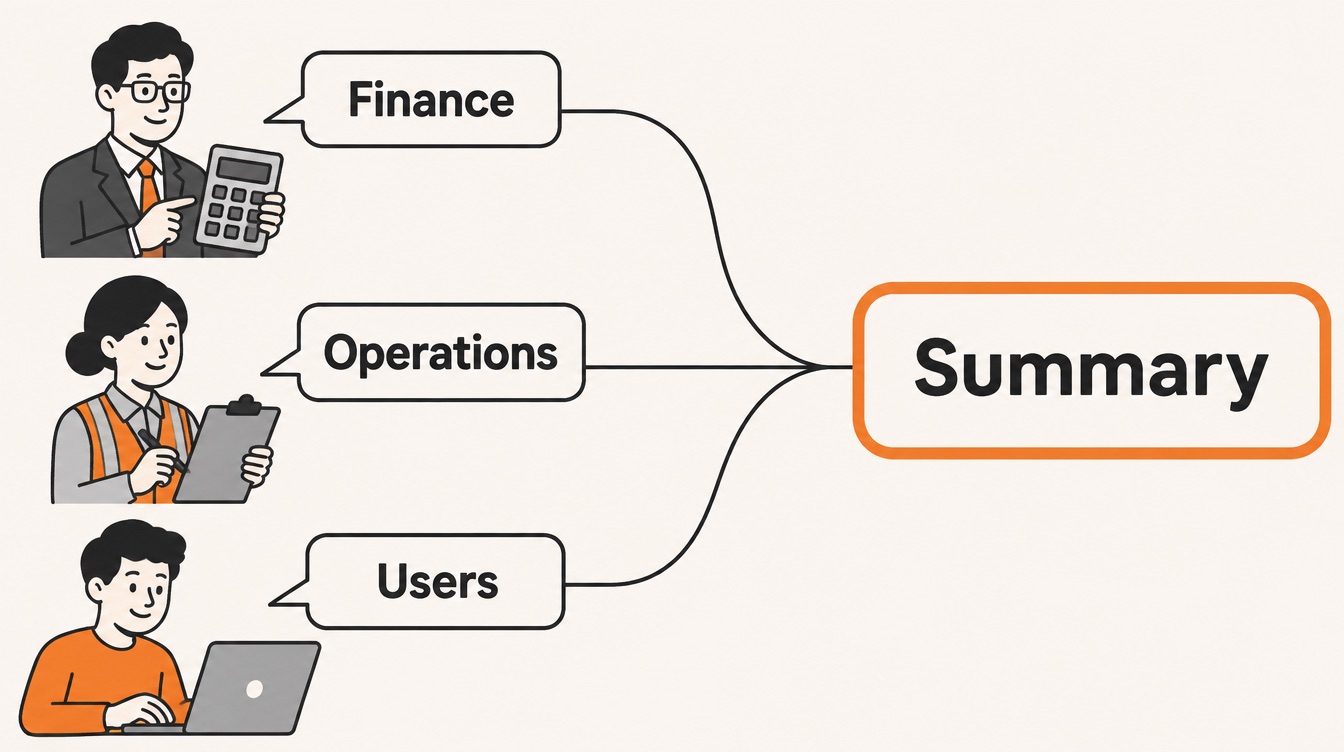
Trying to win all three with one generic message usually wins none of them. The stakeholder value propositions are mostly working material for your team. They shape individual sections and the parts of a presentation aimed at each person. A practical tip: when you reach the point aimed at one stakeholder in an oral presentation, look at that person. It shows them you prepared with them in mind.
The summary value proposition
What the customer sees first is the overarching summary value proposition: one or two sentences that combine the most important value for each stakeholder. The Body of Knowledge makes it the foundation of the executive summary, because it gives evaluators a reason to select you before they read the rest. It should be unique to the opportunity and consistent with your theme and strategy statements. Once it is agreed, use the same message everywhere: the first paragraph of the executive summary, the opening of the oral presentation, and every customer meeting.
A value proposition that changes from section to section is not a value proposition. Write one, then repeat it.
Quantify the payback
The clearest way to show value is to quantify what the customer gets back for what they spend. The Body of Knowledge names three ways to express that return:
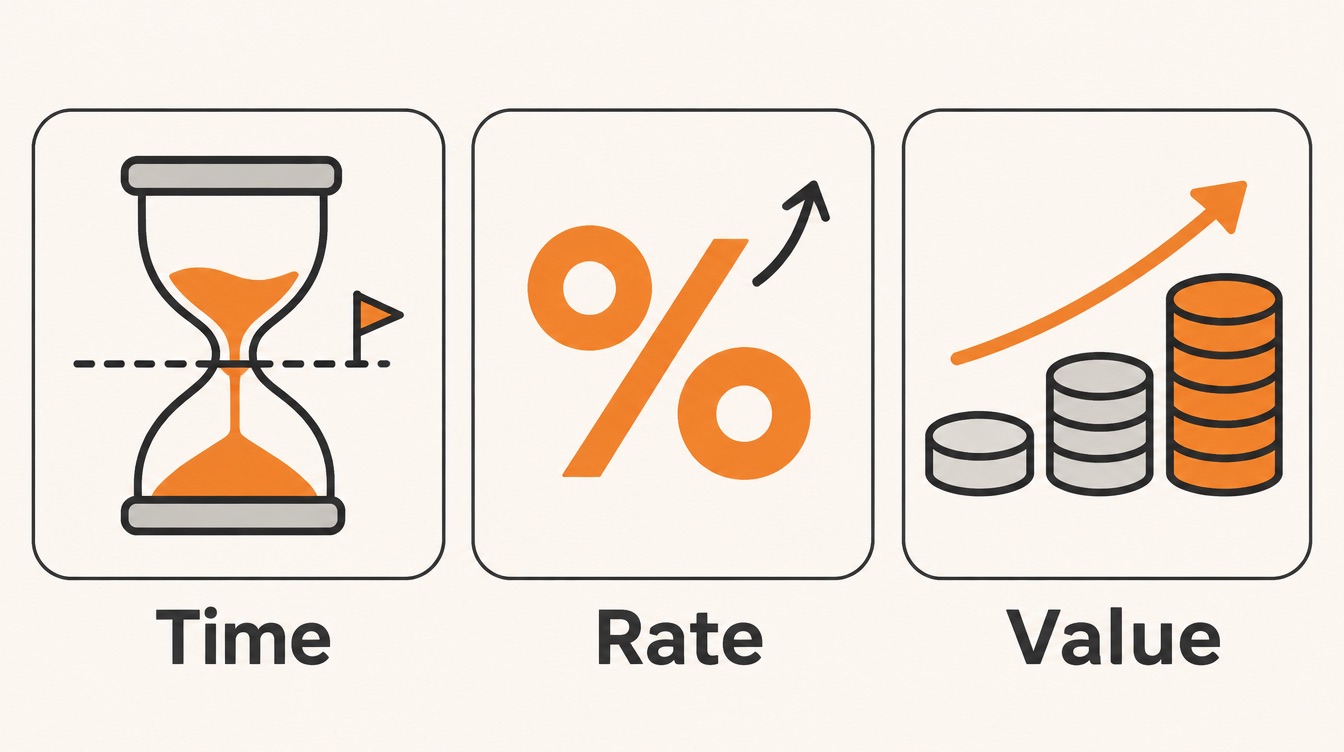
| Measure | Also called | What it answers | Example |
|---|---|---|---|
| Time | Break-even period | How long until the solution pays for itself? | "With 15 dispatchers each saving three hours a week, the scheduling tool pays for itself in eight months." |
| Rate | Internal rate of return (IRR) | What percentage does the investment return? | "An investment of $200,000 is expected to return $260,000 over two years, a 30% return." |
| Value | Net present value (NPV), economic value added (EVA) | How much money is gained or saved? | "You save $80,000 in year one and $150,000 a year after that: $380,000 over three years." |
You rarely need a finance model to do this. Start from the benefit the customer wants, state a few reasonable assumptions about your solution, and calculate a simple, specific figure. The Study Guide is clear that this persuades far more than generic claims such as faster time to market, lower costs or better efficiency, which every bidder can write and no evaluator can check.
Here is how specific this can get. In an advertising concession bid for a large digital billboard, a convincing value proposition sets out the operating cost, the unit price of ad slots, when the operation breaks even, and the total revenue over the contract. When the figures are knowable, the more exactly you show them, the stronger the proposal.
Promise a range, state the conditions
The Body of Knowledge expects resistance from colleagues. Building a value proposition takes time. The team may feel it doesn't know enough about the customer or the competition. And people worry that specific numbers will be read as guarantees. You can hear the avoidance in phrases like "results will depend on how the project goes", "this kind of solution is hard to quantify" or "in similar cases, customers saw improvements".
There are two professional ways through this:
- Commit to a range and name the conditions. "A 10–15% reduction in processing time within six months, assuming the current case volume and that integration with the records system is complete by month two." A range with explicit assumptions is honest and still specific.
- Use proof points. The Study Guide defines a proof point as what a similar customer, looking for a similar solution, achieved with a similar solution. For example: "Clients in your sector using this product reported customer satisfaction scores rising by roughly 20%." Because it reports past results instead of promising future ones, internal reviewers find it easier to approve. It only works if your organization records outcomes from earlier projects, which is a good reason to start.
A hope
"Our solution will significantly improve efficiency and reduce your costs."
A value proposition
"You will cut processing time by 10–15% within six months of go-live, measured against this year's baseline. Two agencies of similar size achieved 14% and 17% with the same approach."
Put simply, a promise without a number is a hope. A promise with a number, a timeframe and a measure is a value proposition.
Choose the right kind of impact
Two more reminders from the Body of Knowledge keep value propositions honest.
The return may not be financial. Some customers care most about risk reduction, service quality, public trust or the time their staff get back. Work out which kind of impact matters most to this customer and emphasize that one. Look for impact that is measurable, clearly linked to your products or services, and in proportion to the fees you will charge. Claiming a ten-million-dollar benefit from a fifty-thousand-dollar service invites doubt, not interest.
Make it visual. A simple chart of the payback curve, a before-and-after comparison or a one-line graphic lets the customer grasp the value quicker and recall it later. It also carries some emotion, which helps persuade. This works even when the value is intangible.
Not all fields can be quantified to the same degree. Creative work and services judged largely on subjective quality are harder to put into numbers, and that is fine. Where the figures are knowable, though, leaving them out is a choice, and the customer will notice.
Why it is worth the effort
The Study Guide cites proposal writing expert Tom Sant's observation that the average proposal decision takes about six minutes. A clear value proposition is what an evaluator can absorb in that time. It organizes your proposal strategy, gets attention, shows you understand the customer, and sets you apart.
The Body of Knowledge also states the cost of skipping it. If you don't sell on value, the customer will choose on price, or choose to do nothing. You don't need the lowest price to win, but you do need to show more value than the other bidders. Leaving the value proposition out because it is hard to write simply limits your chances.
A template you can use on your next bid
- List the stakeholders who influence the decision and write down what each one cares about most.
- Choose the impact that matters to each: financial, time, risk, quality or something else.
- Write a value proposition per stakeholder using the five elements: return, benefit timing, cost timing, payback and measurement.
- Quantify the payback as a time, rate or value, with your assumptions stated.
- Add proof points from similar customers, or commit to a range with conditions.
- Test it with the customer before the bid where possible, and adjust.
- Merge into one summary value proposition, put it at the start of the executive summary, and use it everywhere.
A fill-in-the-blanks shape for a single value proposition:
[Customer] will [measurable benefit] within [timeframe] of [milestone], for an investment of [cost and when it is paid], paying back in [period]. We will track it by [measure]. [Similar customer] achieved [result] with the same approach.
What this means when AI writes the draft
AI can now produce a fluent executive summary in seconds. Left to the RFP alone, it tends to produce exactly the paragraph this competency warns against: polished claims about capability, efficiency and partnership that could belong to any bidder. A value proposition depends on things the RFP doesn't contain: which stakeholder cares about what, what results you achieved for similar customers, what payback you can stand behind. People have to supply those. Then the AI can carry them consistently through a hundred pages.
Where Contrl fits
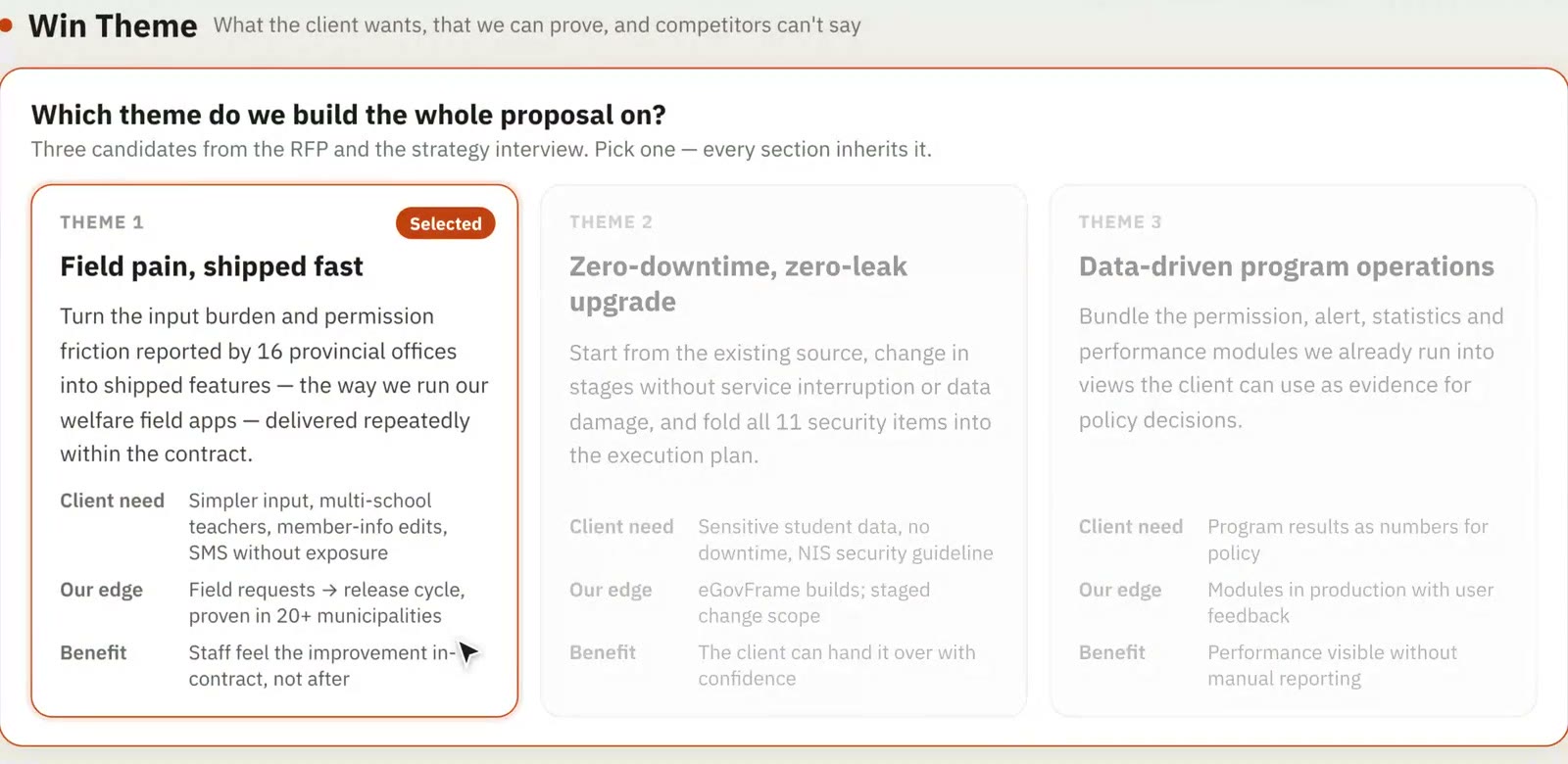
The point Contrl (app.contrl.ai) handles is the one this episode keeps returning to: one value message, carried through every section. After a chat strategy interview about the client, your company and the competition, Contrl proposes win themes that each state the client need, your edge and the benefit. You pick one and every section inherits it, so the stakeholders, measurable benefits and proof points you supply show up consistently from the first page to the last.
Next in the series
You can build a solid value proposition and still lose, because a competitor read the customer better and offered something more tailored. So after "why us?" comes a harder question: can you explain what makes you better than the competition, in the customer's terms? Episode 5 covers Customer and Competitor Intelligence: how to understand the customer and the competition at the same time.
This article is an independent study companion based on the APMP Foundation Study Guide, version 4.2 (© 2025 APMP), which summarizes the APMP Body of Knowledge. It paraphrases and comments on that material and is not endorsed by APMP. The help desk, public-sector stakeholder, payback, billboard and processing-time examples and all figures in them are illustrations written for this article. For the authoritative text and certification information, see apmp.org.