Here is this episode's question: can you explain what makes your company better than the competition, as the customer sees it?
The last four words are the hard part. Every bid team can list its own strengths. Far fewer can say which of those strengths the customer actually values, how the customer rates each rival on the same points, and why the customer might still pick someone else. That gap is what customer and competitor intelligence closes. In short, customer intelligence tells you what the buyer needs, competitor intelligence tells you how the buyer sees every bidder, and together they decide what your proposal should argue.
This series works through the APMP Body of Knowledge as summarized in the APMP Foundation Study Guide. This competency sits under Focus on the Customer, and it supplies most of the raw material for the win strategy you will build later.
Why intelligence decides who wins
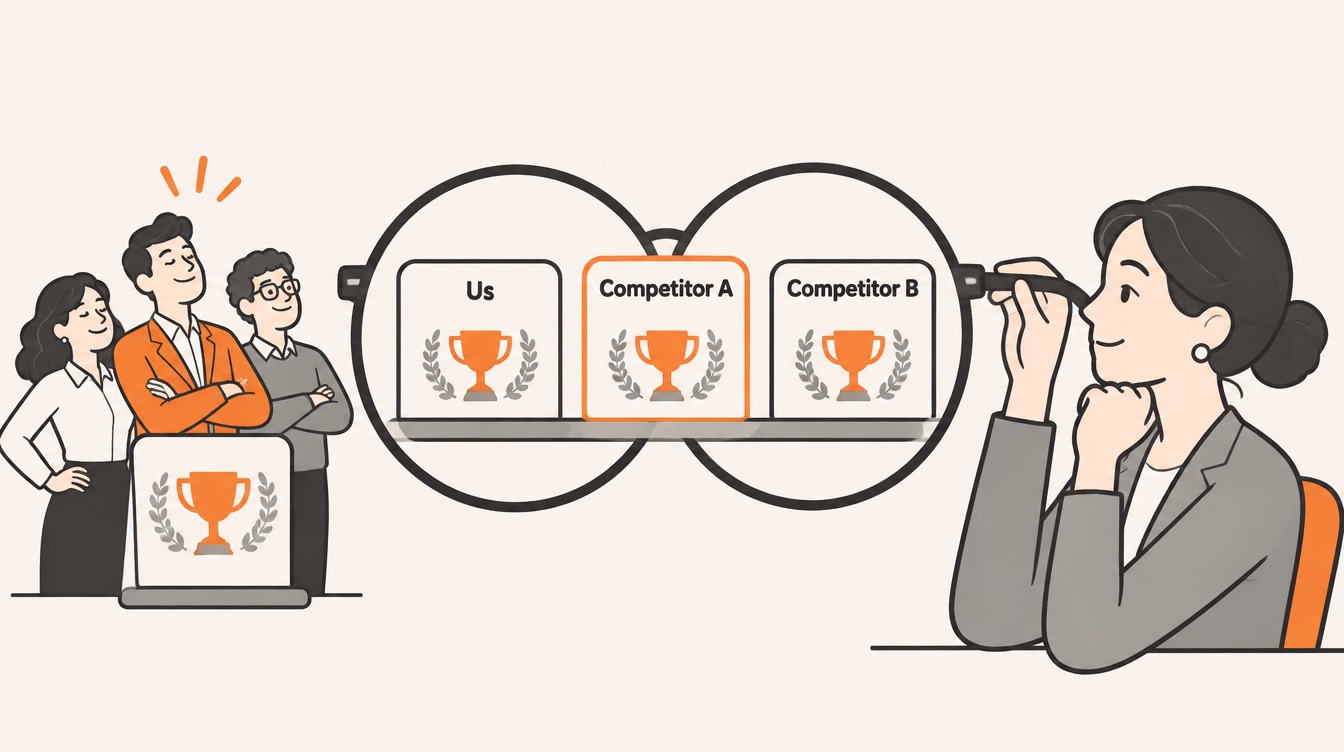
The Body of Knowledge frames the topic with a few blunt questions. Why does a customer buy from one company instead of another? How does a company set itself apart? What improves the odds of submitting the winning proposal? Its answer is that it comes down to three things: planning your strategy and approach, researching what the customer needs, and identifying each competitor's strengths, weaknesses and strategies objectively.
That makes intelligence a core part of capture planning, not just a proposal task. It helps leaders decide well across the whole opportunity lifecycle, in commercial and government markets alike. In the proposal, it sharpens the value proposition, highlights strengths that match the customer's priorities, and lets you answer the weaknesses of competing offers.
Teams that skip this work tend to fall into five traps:
- Looking only at their own strengths. Evaluators score against the customer's priorities, not yours.
- Underrating the competition. "They can't do it" is not analysis. You need to know why the customer might like a rival, and why it might not.
- Reading only the RFP. The requirements are there, but the reasons behind them usually aren't.
- Keeping information in individual heads. What one salesperson knows never reaches the proposal unless it is written down and shared.
- Treating intelligence as snooping. Because it feels uncomfortable, it doesn't get done at all.
All five share one cause: the point of view is your own. The fix is the same shift each time, to how the customer sees it.
Customer intelligence: what the customer needs
The Body of Knowledge defines customer intelligence as understanding a customer's needs, both spoken and unspoken, along with the skills the customer looks for in contractors to meet them.
This understanding isn't built during the proposal. Sales or the capture team develops it over months or years, and the most valuable information comes from direct contact with the customer. That is why the Study Guide stresses close cooperation between the proposal writers and the capture team. Writers can only put into the narrative what capture has learned and passed on.
Done well, customer analysis gives a big-picture view of the market and the opportunity, helps decide the full range of products and services to offer, and shows how the contract will be delivered after award. Basing it on independently verifiable information is what turns it into a strategy rather than a hunch.
A practical way to organize what you learn is to read three layers at once:
| Layer | What it covers | Where it comes from |
|---|---|---|
| Spoken | Requirements, instructions, evaluation criteria | The RFP and its amendments; everyone has this |
| Unspoken | Hot buttons: what the customer fears, who is exposed if the project fails, what result they want to report upward | Conversations with the customer before and during the bid |
| Context | Budget source, decision structure, buying method, history with the current supplier | Customer contacts, public records, colleagues |
Only the first layer is in the RFP. The other two are where you get ahead.
Competitor intelligence: how the customer sees your rivals
Competitor intelligence, in APMP's definition, means objectively understanding the strengths, weaknesses and strategies of the companies competing against you. It is an established business discipline for understanding the competitive forces that affect your company's long-term viability.
For a single opportunity, the goal is specific: to understand each competitor's position as the target customer perceives it, using in-house people or contracted support. Three questions keep it focused:
- Who is likely to bid, alone or in a team?
- What will each of them probably offer, and at what price level?
- How does the customer see them? The safe choice? The cheap one? The innovator? The incumbent they are tired of?
The work can take a long time on an opportunity with a long lead-up, or it can be as brief as the schedule allows. What the Body of Knowledge insists on is that it happens. You owe the customer a balanced, objective reason to choose you over each alternative. If you haven't worked out that reasoning, the customer will reach a conclusion without you, and it may not be the one you want.
Customer intelligence tells you what to promise. Competitor intelligence tells you why the customer should believe only you can deliver it.
Plan collection around decisions
The Body of Knowledge's first best practice is to build a collection plan that serves decision-makers. Intelligence is useful when it answers the questions leaders face on a specific opportunity: at gate reviews, when shaping the solution, and when writing the proposal. So the plan should start early and continue for the whole business development lifecycle.
In practice, a collection plan is a list of questions you need answered, not a pile of documents. A useful starting set:
- Needs and hot buttons: the problems the customer has named and the worries it hasn't.
- Decision-makers and influencers: who scores the proposal, who signs, who could object.
- Budget, schedule and buying method: funding source, timing constraints, procurement route.
- Evaluation and risk: how points are awarded, where deductions are likely, what failure would look like.
- History: previous suppliers, past complaints, earlier projects that went wrong.
Collect for decisions, not for storage. If a piece of information wouldn't change a decision or a sentence in the proposal, it can wait.
Where the intelligence comes from
Your own colleagues first
The Study Guide makes a point that surprises many teams: you can often learn most of what you need about competitors simply by asking your colleagues. People in sales, delivery, partnerships and support meet competitors and customers all the time. The capture team should build networks to tap that knowledge, engage early, and set up channels, formal or informal, that suit the company's culture. A knowledge base that everyone in the company can reach is one of the most effective ways to share it.
Public sources, primary and secondary
Public sources are plentiful, and they come in two kinds. Primary sources are original data, such as a government's published budget or a procurement notice. Secondary sources analyze that data, such as a news story about the budget request. In public procurement, notices, Q&A responses, contract award results and competitors' own websites and announcements are all open and worth tracking over time.
Two habits from the Body of Knowledge are easy to adopt: find out which sources your customer reads and add them to your research, and ask other capture managers which publications they rely on.
Stay on the right side of the line
The most important misconception the Study Guide corrects is that competitive intelligence is covert. It isn't. Nobody should break the law to gather it. It is an ethical business practice, guided by the written code of the Strategic Consortium of Intelligence Professionals (SCIP), and most companies add their own legal guidance, often as part of ethics training.
- Open sources only. Use information that is freely available and can be shared without legal or ethical restrictions.
- Never use proprietary data without permission. Another company's confidential material is off limits unless its owner has agreed in advance.
- Accept gaps. Open data will be incomplete. Derive what you can, state your assumptions, and check them.
- Verify as a group. Brainstorming with colleagues is how the Body of Knowledge suggests testing what you have collected.
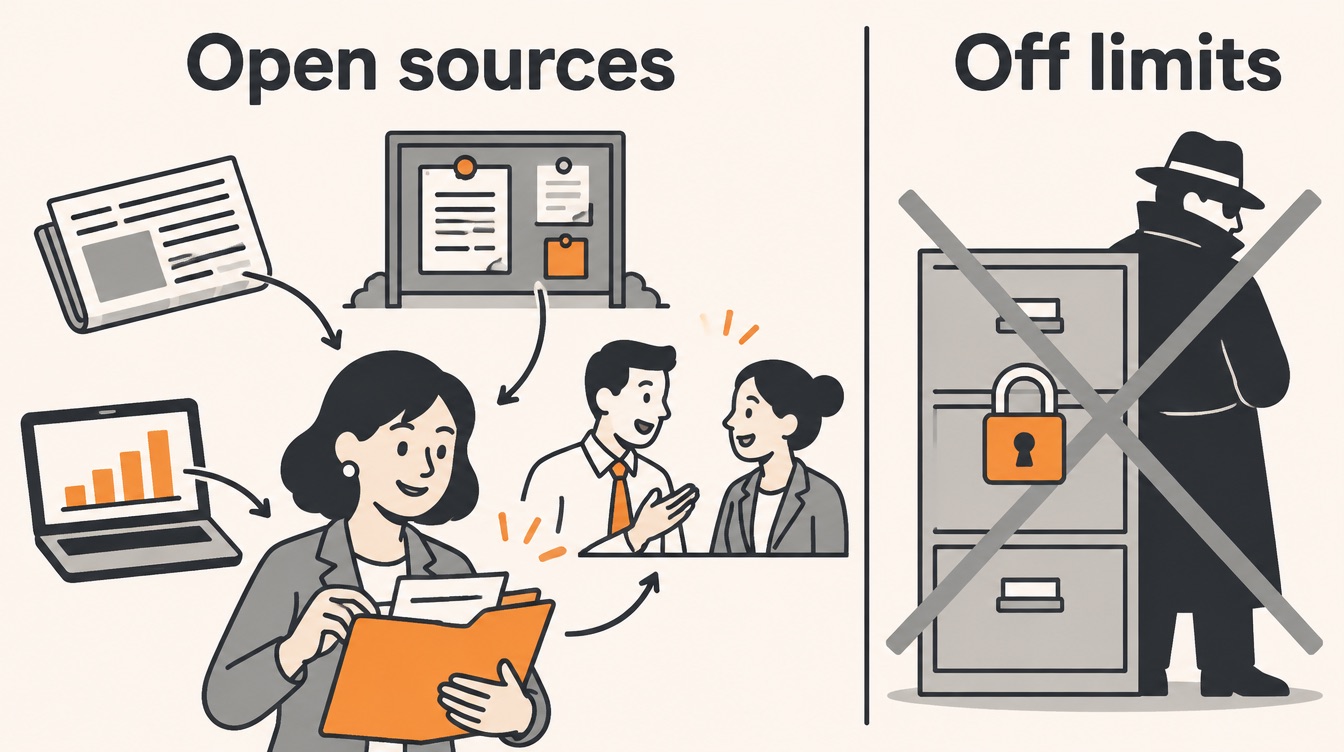
The other misconception is that the data is hard to get. Given how much is available from colleagues and online, the Study Guide's view is that finding most of what an effective proposal needs is fairly simple. The difficulty is usually discipline, not access.
Turning intelligence into analysis
Collected facts don't win bids by themselves. You need a way to compare bidders that keeps you honest. The Body of Knowledge notes that companies easily lose perspective, especially when a contract they have held for years comes up for rebid. Incumbents tend to assume the customer sees them the way they see themselves.
The bidder comparison matrix
A bidder comparison matrix lists the customer's issues or hot buttons and rates you and each competitor against every one. The key rule: the ratings are the ones the customer would give, not the ones you would give yourself. A matrix scored from your own point of view will tell you what you want to hear.
Here is an example written for this article, for an IT service transition. The customer has weighted its issues out of 100.
| Customer issue | Weight | Us | Competitor A (incumbent) | Competitor B (low cost) | What it means for the proposal |
|---|---|---|---|---|---|
| No service disruption during transition | 35 | High | High | Low | On par with A. Prove a detailed transition plan; the risk of switching to an untested team speaks for itself. |
| Field staff actually adopt the new system | 25 | High | Medium | Medium | Main discriminator. High weight, we are strong, both rivals are weaker. Lead with it. |
| Total cost within budget | 20 | Medium | Medium | High | B's strength. Answer with value and lifetime cost, not by matching price. |
| Security certification | 20 | High | High | High | Hygiene factor. Every bidder meets it. State compliance and move on. |
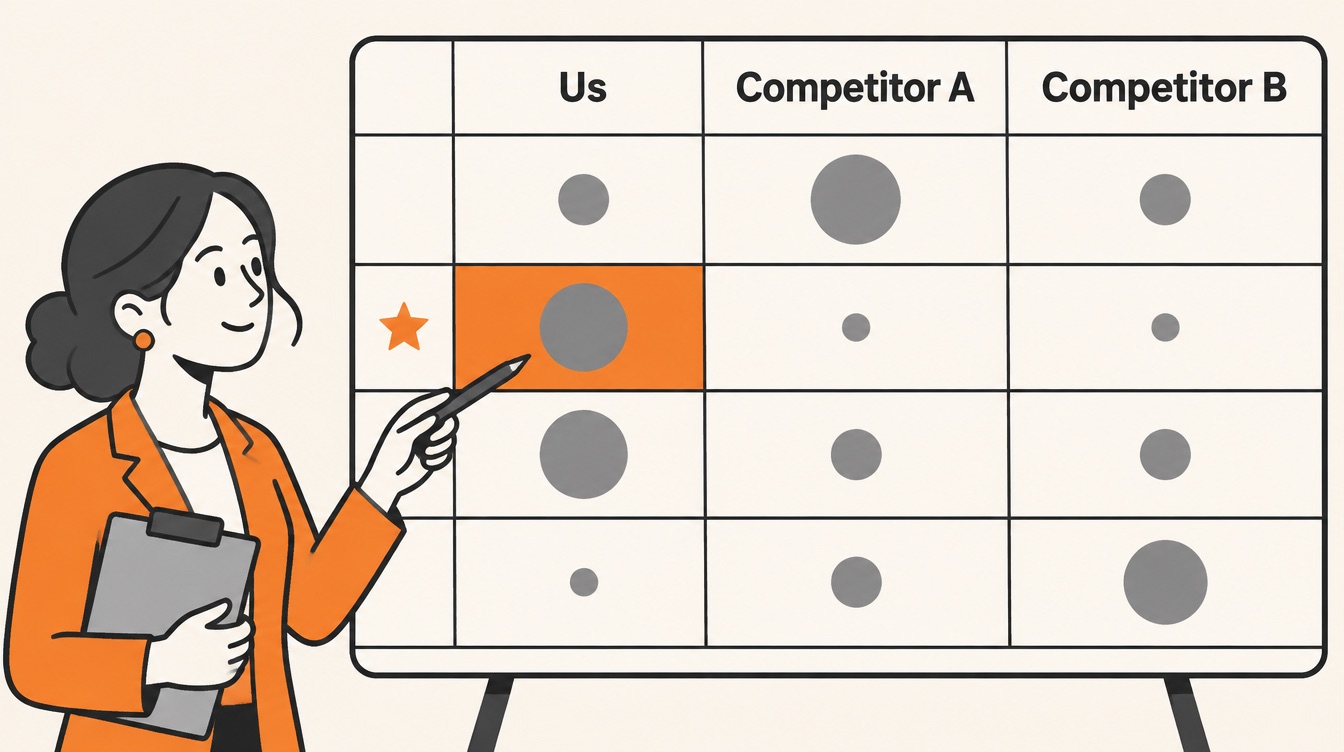
Reading the matrix is simple. Where you look the same as a competitor, you cannot differentiate. Your core message belongs where three conditions meet: the customer weights the issue highly, the customer sees you as strong, and the customer sees competitors as weaker. Combined with a clear picture of the customer's needs, this shows exactly where the proposal should focus.
The format is flexible; the Body of Knowledge accepts several approaches. When time is short, rate how the customer values each discriminator against its hot buttons as High, Medium or Low. With more time, weight the customer's issues out of 100 and rate every bidder, yourself included, on each.
SWOT, filled in by the customer
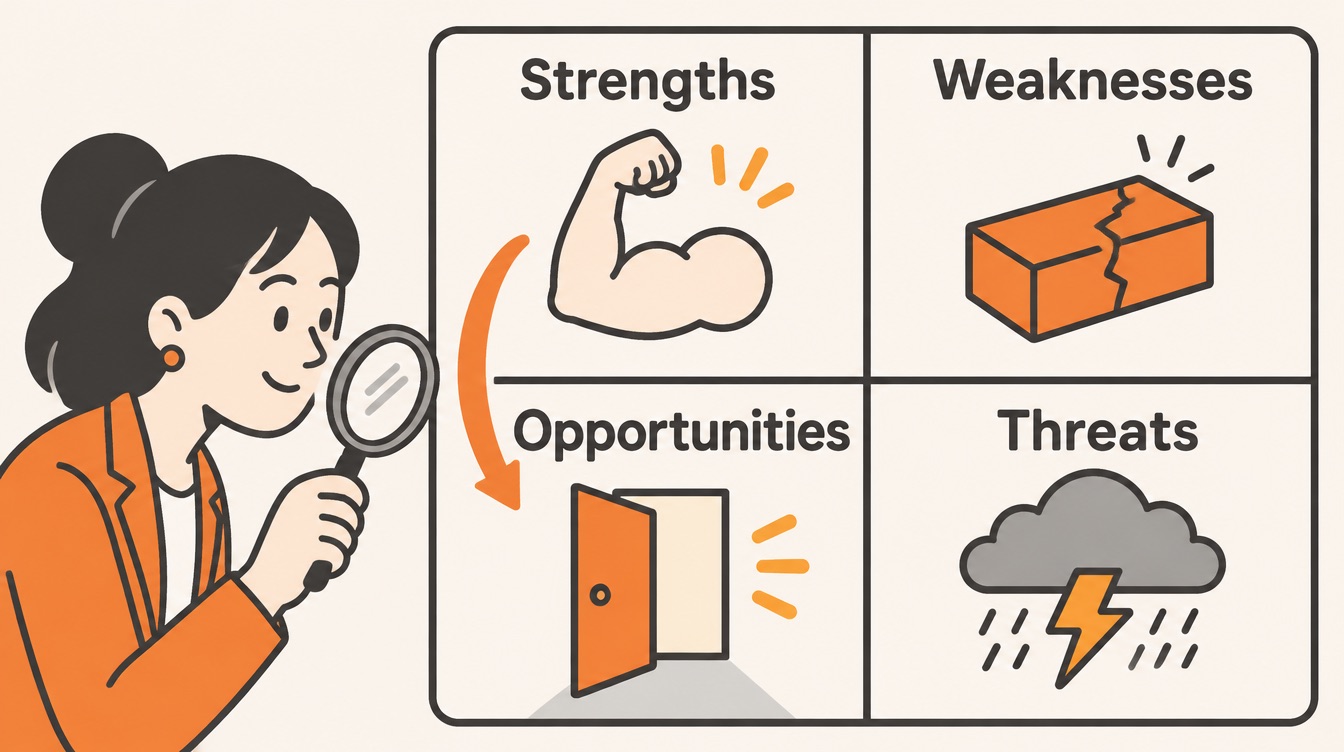
SWOT is famous and often wasted: four boxes get filled and nobody uses them. The Body of Knowledge gives it a sharper job. Build it from the customer's perception of the bidders, and map it like this:
| Quadrant | What goes in it | Role in the proposal |
|---|---|---|
| Strengths | Our strengths | Potential positive discriminators |
| Weaknesses | Our weaknesses | Potential negative discriminators to fix or neutralize |
| Opportunities | Competitors' weaknesses | Openings you can use |
| Threats | Competitors' strengths | Advantages you must counter |
The value is in the intersections. Using a strength to capture an opportunity is an SO or "maxi-maxi" strategy, which the Study Guide gives as its example. The same logic produces the familiar companions: use strengths to blunt threats (ST), fix weaknesses to reach opportunities (WO), and avoid fights where your weaknesses meet their strengths (WT). The completed SWOT becomes the baseline for your capture and proposal strategy.
When everyone looks the same
Sometimes intelligence shows that the customer has a hot button that no bidder has a track record of delivering. Mark it in the matrix or SWOT: the customer will likely see all competitors as equal there. The same goes for hygiene factors, the standards every bidder is expected to meet, which give nobody an advantage. In those areas the Body of Knowledge's advice is to remind the customer that all bidders are equal, rather than pretending to a lead you don't have. That keeps a competitor from claiming the ground for itself.
A story: intelligence until the last minute
Here is an example from my own bids, told generally. Some years ago my company competed for a media-art installation in a city park. We had no reference projects in media art, and on paper we were the weakest of the bidders.
On presentation day the organizers seated all the presenting companies in one waiting room. We introduced ourselves and exchanged business cards openly, so we knew exactly who we were up against. In the minutes before our slot I looked at each competitor's public website to see how they presented their work. All four built their installations around projection. Ours used a display.
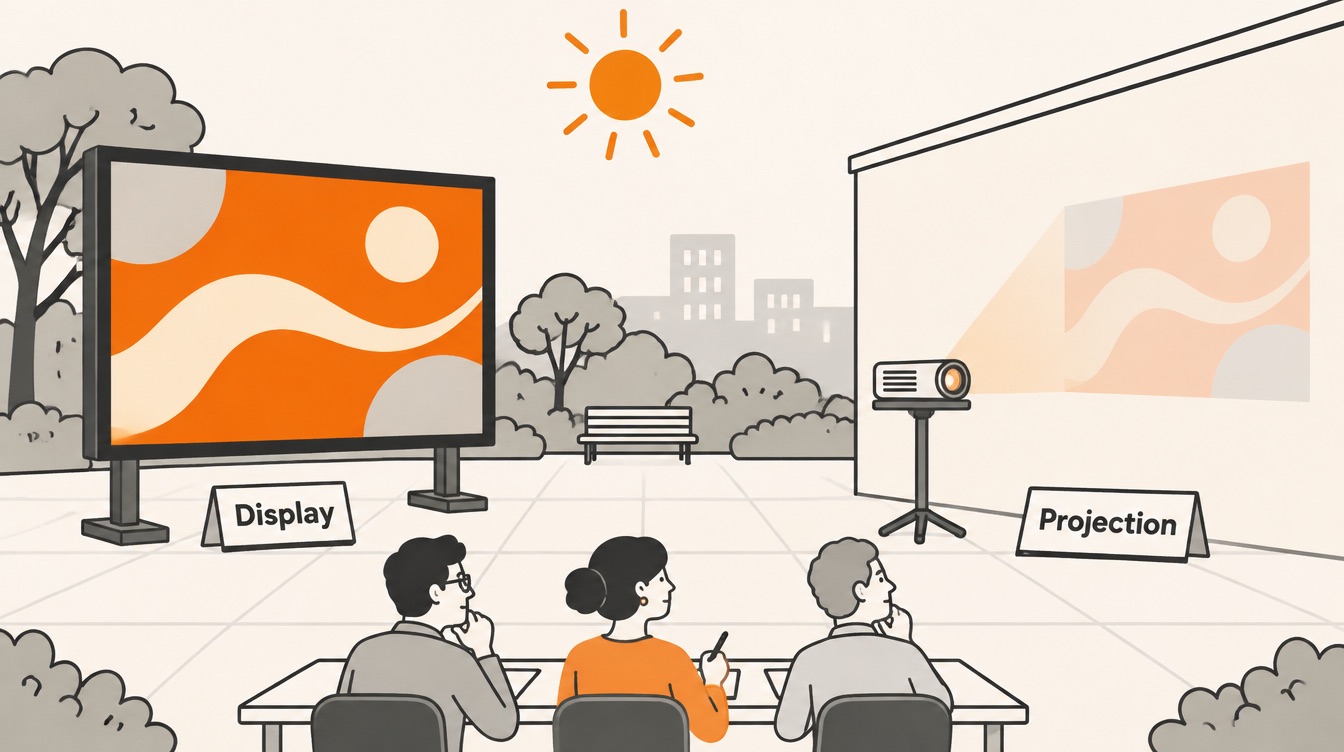
Our slides had already been submitted, so I changed only the opening. I started by explaining what the evaluators should expect from an outdoor installation: it should work in daylight as well as at night, and a bright display can do that where a projection struggles. We presented first, so every competitor was then judged against that frame. We won.
Nothing in that story was secret: business cards offered in person and public websites are open sources. What mattered was treating intelligence as something that continues until the moment you speak.
From intelligence to strategy
The Body of Knowledge ties this competency to one purpose: helping proposal writers present the company's value proposition as strongly as it can be. Intelligence does that by feeding win themes built on verified customer needs, discriminators taken from the cells where you clearly lead, risk answers to the threats in your SWOT, and brief neutralizers for equal ground. Saying "we are better" is a claim. A difference the customer would confirm is a strategy.
Checklist for your next opportunity
- Separate the spoken from the unspoken. List the RFP's requirements and, next to them, the hot buttons and context you learned elsewhere.
- Write a collection plan as a list of questions tied to upcoming decisions: gate reviews, solution, proposal.
- Ask colleagues and record answers in a knowledge base the whole company can use.
- Track public sources over time, including the ones the customer reads.
- Collect ethically. Open sources only, follow company legal guidance and SCIP's code, and never use proprietary data without permission.
- Score bidders as the customer would in a bidder comparison matrix, ratings or a weighted scale, and verify it as a team.
- Build a customer-view SWOT and choose strategies at the intersections.
- Mark equal ground and hygiene factors, and plan to neutralize them rather than overclaim.
Where Contrl fits
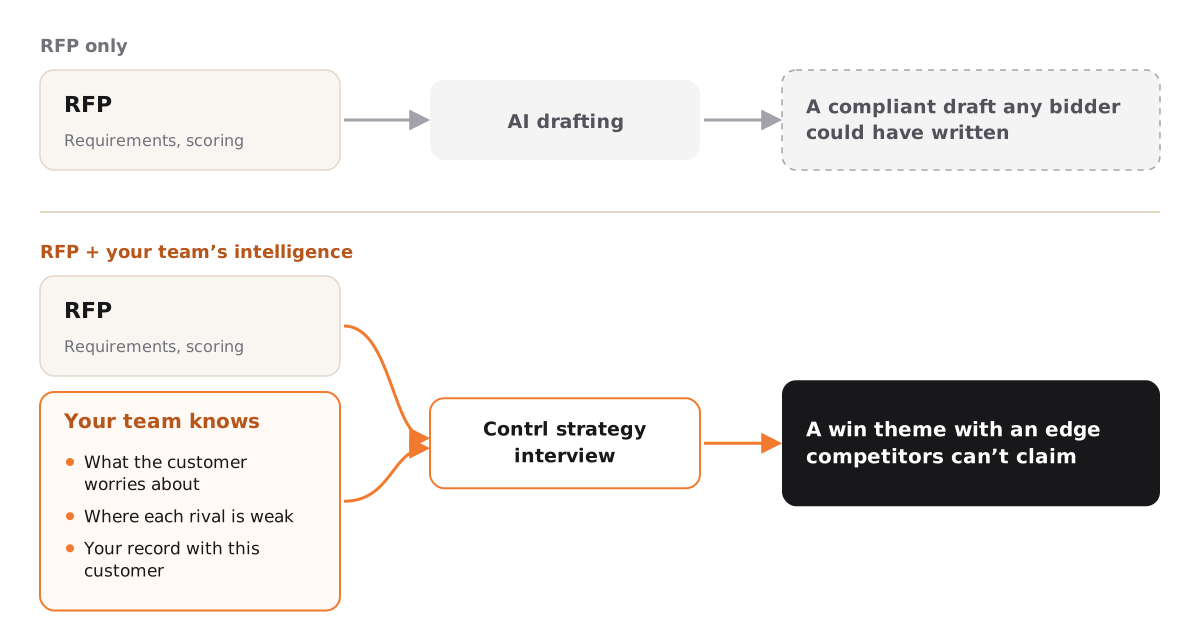
An AI only knows what is in the RFP, so the intelligence in this episode has to come from your team. In Contrl, that happens in the strategy interview: it asks in chat about the client, your company and the competition, then proposes win themes that each state the client need, your edge and the benefit. You pick one and every section inherits it, so what your team knows about the customer and the rivals shapes every page instead of staying in someone's head.
Next in the series
All this intelligence has to show up somewhere evaluators can't miss. Many decide how they feel about a bid on its first pages. Episode 6 covers Executive Summaries: can you win the evaluation on the first page of your proposal?
This article is an independent study companion based on the APMP Foundation Study Guide, version 4.2 (© 2025 APMP), which summarizes the APMP Body of Knowledge. It paraphrases and comments on that material and is not endorsed by APMP. The five traps, the three-layer table, the collection-plan questions, the bidder comparison matrix example and the media-art story were written for this article from the author's own practice. For the authoritative text and certification information, see apmp.org.