Here is this episode's question: can you win the evaluation on the first page of your proposal?
You can come close, and the executive summary is how. Most teams treat it as a shortened version of the proposal, written last and filled with thanks, company history and a tour of the chapters. That is the wrong job. An executive summary is the business case for choosing you. It answers the one question every evaluator brings to every bid, why us?, starting from the customer's problem and ending with a reason to pick you that an evaluator can repeat to their boss.
This series works through the APMP Body of Knowledge as summarized in the APMP Foundation Study Guide. Executive summaries sit under Focus on the Customer, and they are where the customer understanding from the last two episodes finally reaches the page.

What an executive summary is, and what it isn't
An executive summary is the opening section of a proposal (or a separate document) whose purpose is to persuade the reader to select you, your team and your solution. Customers name it in different ways: management summary, management overview, proposal overview, or simply overview. Whatever the label, the Body of Knowledge is direct about its aim. It should summarize the reasons to choose you, not the technical content of your offer.
That distinction changes almost everything about how you write it:
| A summary of the proposal | The case for choosing you | |
|---|---|---|
| Opens with | Thanks, the company profile, the project background | The customer's goals and the problems in the way |
| Body | A condensed tour of each chapter | How your solution solves those problems, and what the customer gains |
| Evidence | Adjectives: leading, best, extensive | Numbers, comparable projects, a clear price-to-benefit link |
| Closes with | A promise to work hard | A short restatement of why you, and what happens next |
| Written | On the last day | From the bid decision onward, improved as the strategy matures |
One sentence to keep in mind: the summary is not a précis of your proposal; it is the recommendation you want the evaluator to make.
Why it is the most important section
The Study Guide calls the executive summary both the first thing the customer reads and the most closely examined part of the bid. Three reasons explain why it deserves more effort than any other section.
Everyone reads it
Proposals are usually scored by a panel, and panel members divide the work. A technical evaluator reads the solution; a finance reviewer reads the price; a manager looks at schedule and risk. Few of them read every page of every bid. Almost all of them, though, read the summary to understand the bid as a whole. Time spent here reaches more readers than time spent anywhere else.
It makes the evaluator's job easier
Evaluators rarely make the final decision alone. They recommend a winner to a manager or a board, and they need arguments to do it. A good summary hands them those arguments ready-made: this bidder understood our problem, this is how they solve it, this is what we gain, and this is why they are a safer choice than the others. If your summary lets an evaluator justify recommending you over the competition, you have done most of the persuading for them.

It sets expectations, and sometimes it is your only chance
A professional, persuasive summary leads reviewers to expect the same quality in the rest of the proposal. And in question-and-answer formats, where the customer dictates every heading and leaves little room to differentiate, the summary may be the only place you can make your case in your own structure.
There is an internal benefit too. An early draft of the summary is an excellent way to brief your own team and management on what the bid is about and why you expect to win.
The rule that follows is simple. Unless the customer explicitly forbids it, which does happen, include an executive summary. The Body of Knowledge recommends one for any proposal longer than about ten pages.
The five-box structure
The Body of Knowledge allows many ways to structure a persuasive summary and highlights one that is easy to apply: the five-box structure. Think of it as an order of persuasion rather than a table of contents.
- The customer's goals, challenges and what drives them. Only the customer appears here. Not your company, not even your solution yet.
- Your solution and its key benefits. Each benefit should answer a need you just described, as specifically as you can make it.
- The customer's investment. Only the most important prices and conditions, set against the benefit in numbers.
- The next steps. Show that you are already thinking about what happens after award.
- Why you. A short paragraph, sometimes a single sentence, that restates why the customer should choose you and your commitment to making the work succeed.
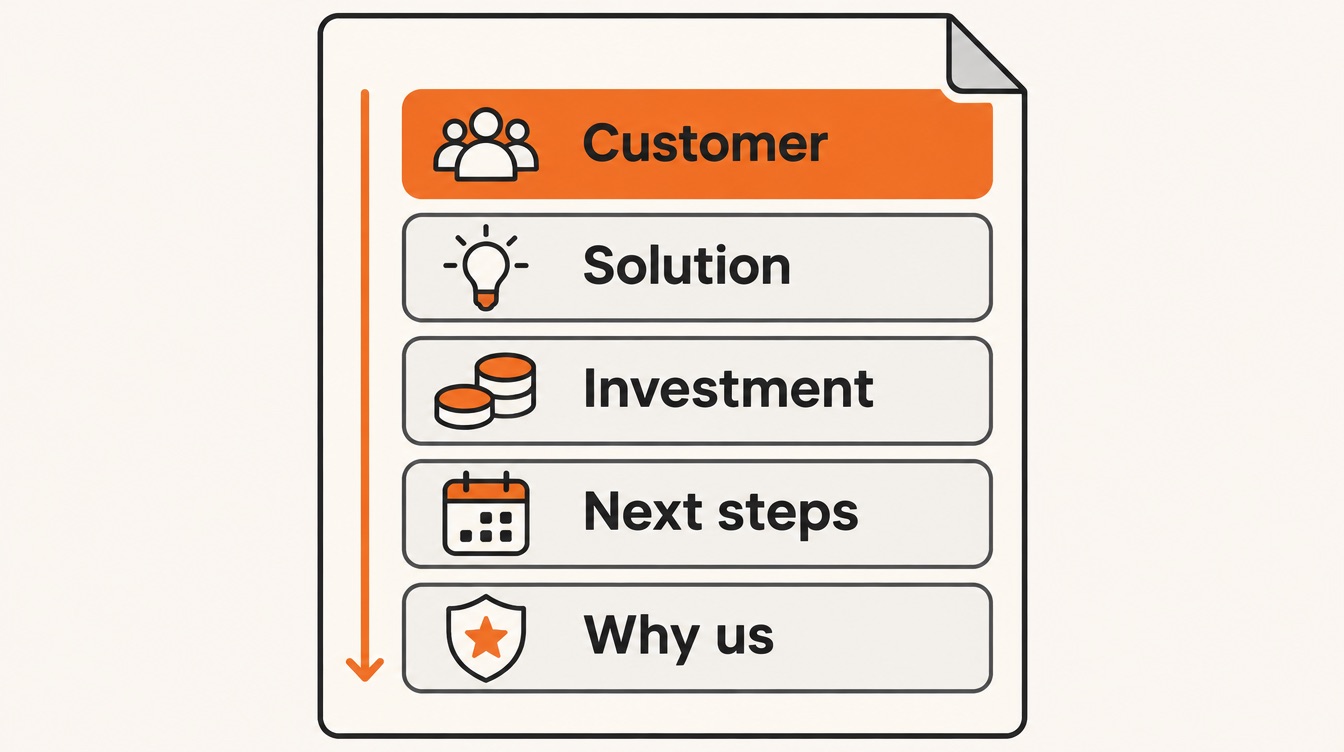
Boxes 1 and 2: the customer's problem, then your answer
Read the first two boxes as a pair. If your company name appears in box 1, it appears too early. The goal of the opening is for the customer to recognize their own situation: yes, that is exactly our problem. Only then does your solution arrive, as the answer to what was just said.
A practical pattern: open box 1 with "You need to achieve X, and Y is standing in the way," then open box 2 with "We will do A, so that you get B." Benefits come before features. Nobody scores a feature; they score what it changes for them.
Boxes 3 to 5: reduce the customer's doubts
The second half of the summary deals with the questions that make a customer hesitate. Box 3 answers "what will this cost, and what do we get for it?" A price on its own reads as an expense. The same price next to hours saved, cost avoided or a payback period reads as an investment, which is exactly the value-proposition thinking from episode 4.
Box 4 builds confidence that you can execute. A plain, dated outline of the first weeks after award, such as mobilization, cut-over and stabilization, shows that you have already thought it through. Box 5 closes the argument. "We will do our best" is not a reason to choose anyone. Restate the one or two discriminators that matter most to this customer and stop.
Two practical notes from the Study Guide: once the summary runs past two pages, use subheadings so readers can find their way; and if the customer prescribes the structure, that structure wins.
A worked example: before and after
Here is an example written for this article. Imagine a city agency whose citizen complaints take too long to resolve because cases are logged in several departments' systems that don't talk to each other. A typical opening paragraph reads like this, and could have come from any bidder:
Before
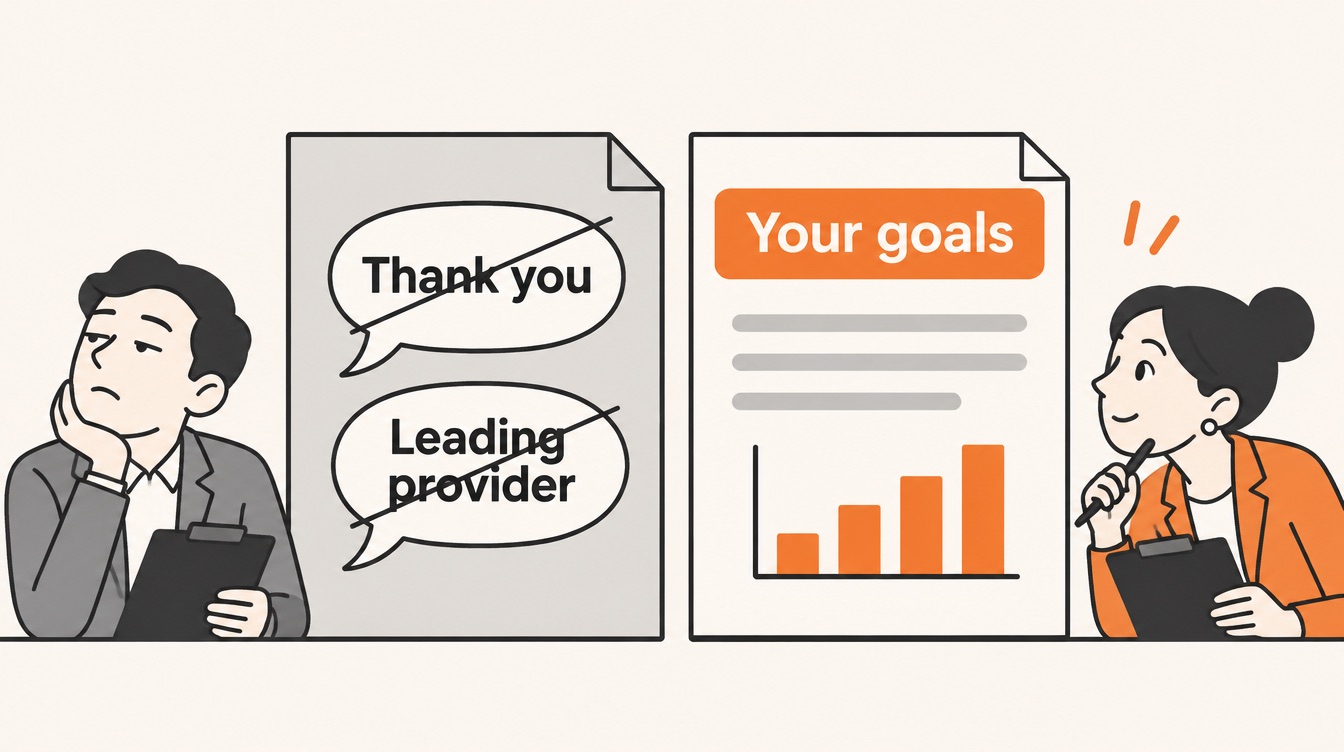
"Thank you for the opportunity to submit this proposal. With more than twenty years of public-sector experience, our company is a leading provider of digital solutions, and our outstanding technical expertise will ensure the success of your project. The technical approach is described in Chapter 3 and the management plan in Chapter 4."
After
"Your agency needs to resolve citizen complaints faster, but cases are split across department systems, so staff re-enter data and lose track of deadlines. We will connect intake, routing and reporting in one workflow, so that staff handle each case once and managers see every deadline. In comparable deployments at other agencies, reporting time fell by roughly a third, and the new workflow was stable within four weeks of start."
The first version is polite and sounds confident, but it contains no customer, no difference from any competitor and no numbers. The second starts from the customer's situation, offers evidence and ends with a result the evaluator can repeat. (The figures are illustrative; in a real bid they must come from your own verifiable record.)
The rest of the five boxes might continue like this:
| Box | Example sentence for the complaints project |
|---|---|
| 3. Investment | "The phased approach builds on your existing systems instead of replacing them, so the investment is limited to integration and training, and is recovered through staff time saved within the second year." |
| 4. Next steps | "In the first 30 days we map the complaint journey with your staff; by day 60 a pilot runs in two departments; by day 90 we agree the target measures with you." |
| 5. Why us | "We have already connected systems like yours at comparable agencies, so you get faster resolution with low transition risk." |
Practical rules from the Body of Knowledge
Follow the customer's instructions
If the RFP specifies what the summary must contain, where it goes or how it looks, do exactly that. Ignoring the instructions signals that you don't listen, which is the opposite of what the summary is trying to prove. Where the customer's framework and best practice differ, fit the five-box thinking inside the customer's framework; when they conflict, the customer wins.
Give it the customer's name, and make the heading work
Call the section whatever the customer calls it. You can also extend the heading so it carries a message. If the RFP asks for an "Executive Overview", a heading such as "Executive Overview: cutting complaint reporting time by a third" tells the reader the main benefit before the first sentence.
Find the right length
About two pages is typical regardless of proposal size, while a bid running to thousands of pages may need ten or more. The often-quoted one-page summary is a fine aim, but not at the cost of readability, graphics or information the evaluator needs. Be as brief as you can, and no briefer.
Put it first, and make it stand alone
Place the summary at the front of the proposal package and write it as an independent document that someone could read without the rest. Many will.
Show the key messages visually
Graphics add emotional appeal, and a clean layout makes the main points easy to spot. Turning your themes into a graphic is hard, but one well-made visual that shows the customer's benefit can be worth a page of text. Drop any graphic that is dense or doesn't support a point.
Who writes it, and when
The best summaries are team efforts with clear roles:
- Sales and capture know what the customer wants to read. At minimum they supply the customer's business drivers, aims and hot buttons, help shape the key messages and check the finished draft for customer relevance.
- The capture manager or executive should lead the writing, ideally drafting the whole summary with support from the proposal manager.
- Writers, graphic designers and editors polish it. A skilled writer tightens the wording, a designer creates the visuals, and an editor removes the typos and grammatical errors that a reader of the most-scrutinized page will certainly notice.
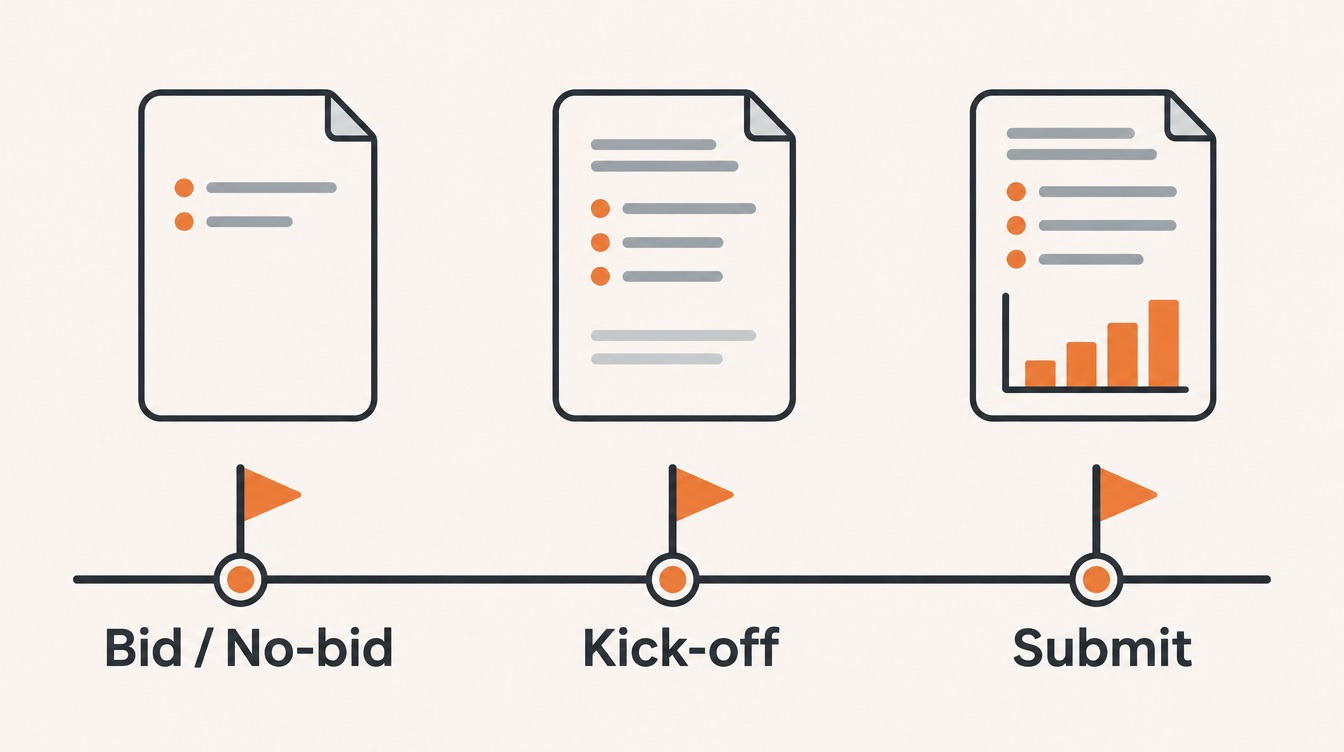
Timing matters as much as roles. A summary assembled at the last minute is rarely persuasive. The Body of Knowledge recommends drafting early, starting with bullet points, and improving the draft over time; ideally the capture manager presents a first version at the bid/no-bid gate. If workload or an unfinished solution makes that impossible, start right after the kick-off meeting. Either is far better than writing it the night before submission.
What doesn't belong in an executive summary
Most weak summaries fail in the same few ways. The Study Guide lists them, and they are worth checking one by one:
| Pitfall | Why it hurts | Do this instead |
|---|---|---|
| Cover-letter habits: a greeting, signatures, "thank you for this opportunity" | The summary is a chapter of the proposal, not a letter. Polite filler spends the most-read space on nothing. | Start with the customer's goals. Put any binding signatures in a separate certification section. |
| Marketing copy and clichés: "leading provider", "customer first" | Marketing text is written for a market, not for one customer, so it adds no substance or credibility. | Use specific benefits for this customer, backed by evidence. |
| Obvious boilerplate | Recycled text tells evaluators you haven't thought about their needs. | Write a business case unique to this opportunity, its requirements and its competitors. |
| Corporate history | It is about you, not the customer. | Move it to an appendix if it must appear at all. |
| Navigation text: "see Chapter 3 for the technical approach" | That is the table of contents' job. | Delete it. |
| Writing only for executives | The whole panel reads it, not just senior decision makers. | Write for both the decision makers and the specialists on the panel. |
| Rushing it at the end | No time to sharpen, review or design. | Draft early and review it before anything else. |
Three tests before you submit
The Body of Knowledge suggests testing the summary before it goes out. These three checks take minutes and catch most generic writing:
- The neutral reader test. Give the summary to someone outside the bid. Can they tell you the key messages afterwards? If not, make the main points easier to find, for example with call-out boxes or a graphic.
- The competitor name test. Replace your company's name with a competitor's. If the text is still believable, it describes any bidder, not you. Make it specific to the benefits only your offer brings.
- The customer name test. Replace the customer's name with another customer's. If it still reads well, it is not about this customer. Tie it more closely to their particular needs.
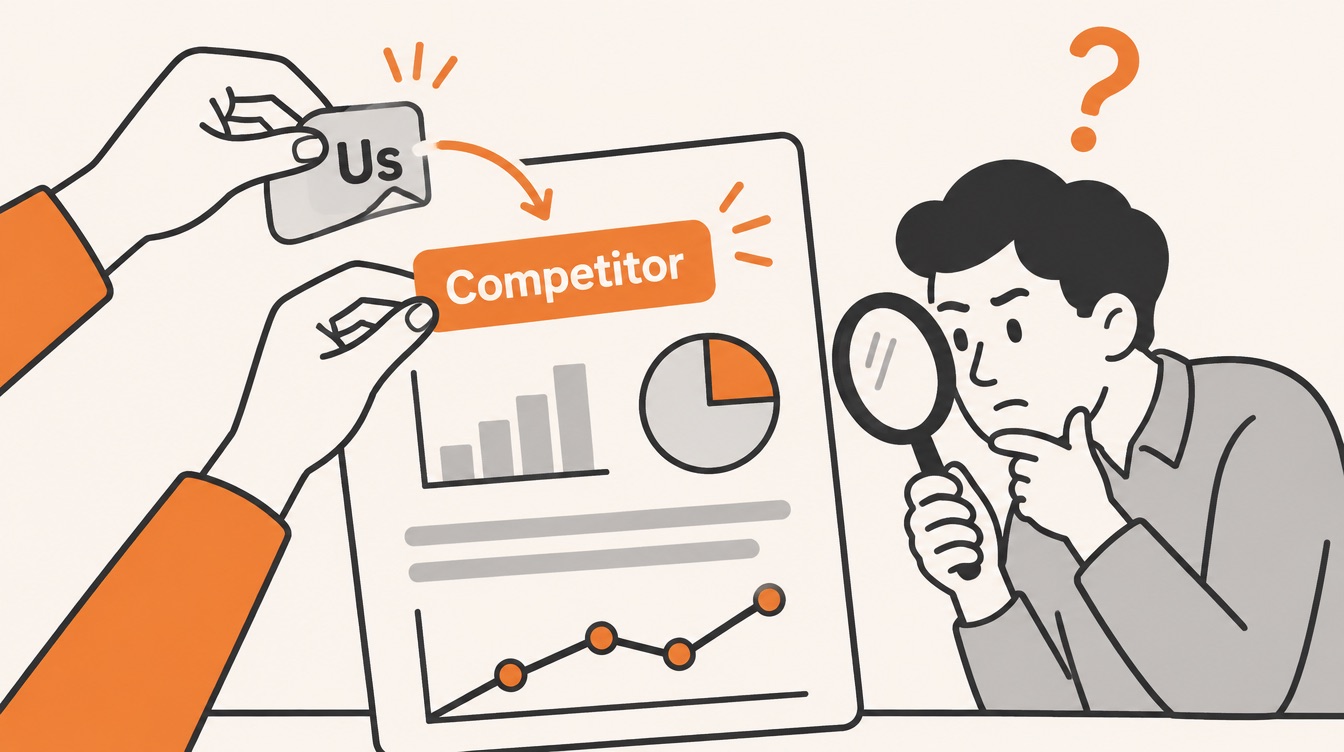
A good summary should feel wrong when the names change. That awkwardness is the sign that it contains your customer, your offer and your reasons.
Checklist for your next summary
- Check the RFP for instructions on the summary's name, content, position and length, and follow them.
- Draft early: bullet points by the bid/no-bid decision, or right after kick-off at the latest.
- Get the customer's drivers and hot buttons from capture before you write a word of box 1.
- Open with the customer only. Your name should not appear in the first paragraph.
- Tie every benefit to a stated need and back it with evidence or a number.
- Set price against benefit in box 3, and show concrete next steps in box 4.
- Close briefly on why you, with the discriminators that matter most to this customer.
- Cut greetings, thanks, slogans, company history and chapter references.
- Add one strong graphic and subheadings if it runs past two pages.
- Run the three tests: neutral reader, competitor name, customer name.
Where Contrl fits
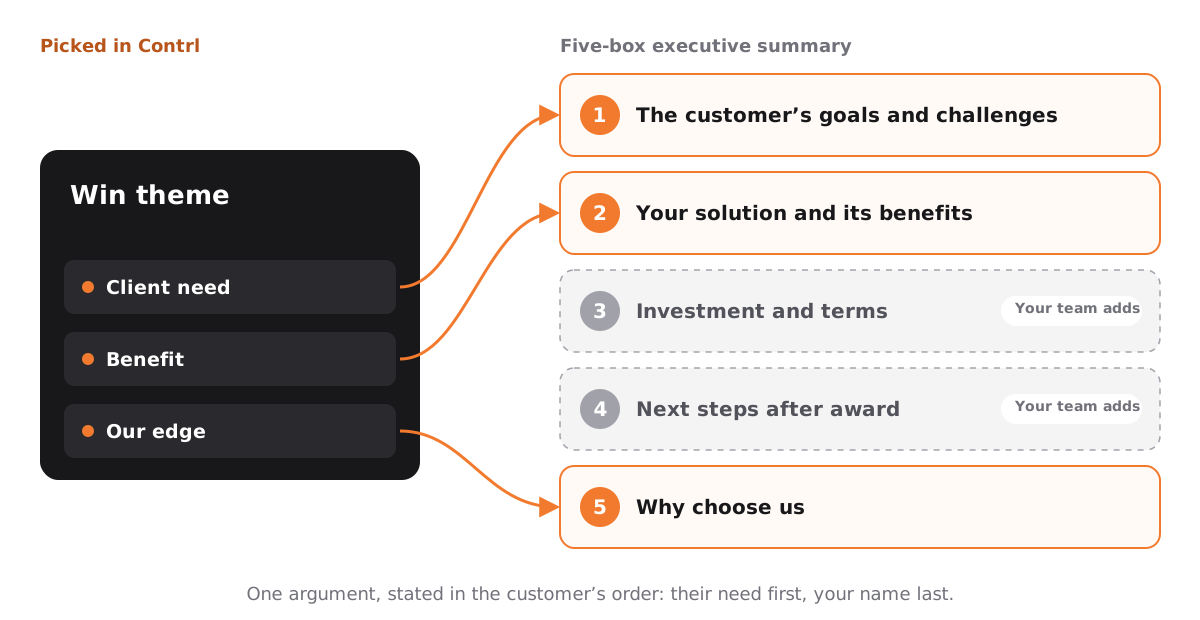
The executive summary is where your win theme is stated most fully, in the customer's order. In Contrl, the win theme you pick already carries the client need, your edge and the benefit, which are the raw material of boxes 1, 2 and 5. If the RFP calls for a summary, it appears in the extracted outline under the customer's own name, and like every section it gets three key-sentence candidates reduced from that theme. The investment and the next steps still come from your team.
Next in the series
A summary can only be as strong as the strategy behind it. Episode 7 covers Strategy and Win Themes: can your differentiation hold its own against a lower price, and how do you carry it through every section of the proposal?
This article is an independent study companion based on the APMP Foundation Study Guide, version 4.2 (© 2025 APMP), which summarizes the APMP Body of Knowledge. It paraphrases and comments on that material and is not endorsed by APMP. The comparison table, the complaints-handling example with its before-and-after text and figures, the five-box example sentences and the sample heading were written for this article. For the authoritative text and certification information, see apmp.org.