Here is this episode's question: can your differentiation strategy beat a price fight?
Price always matters in a bid. But many proposals that lose "on price" were really lost earlier, at the moment an evaluator read three submissions and could not say why one company should be chosen over another. When every bidder looks about the same, price is the only comparison left. The way out is not a lower number. It is a strategy chosen early, sharpened as you learn more, written down so the whole team understands it, and carried as win themes into every page, the price volume and the negotiation that follows.
This series works through the APMP Body of Knowledge as summarized in the APMP Foundation Study Guide. Episode 3 covered where capture strategy comes from and how it relates to proposal strategy, and Episode 4 covered value propositions. This episode is about what happens in between: how a strategy becomes a disciplined set of statements and themes, and how you keep it intact all the way to contract.
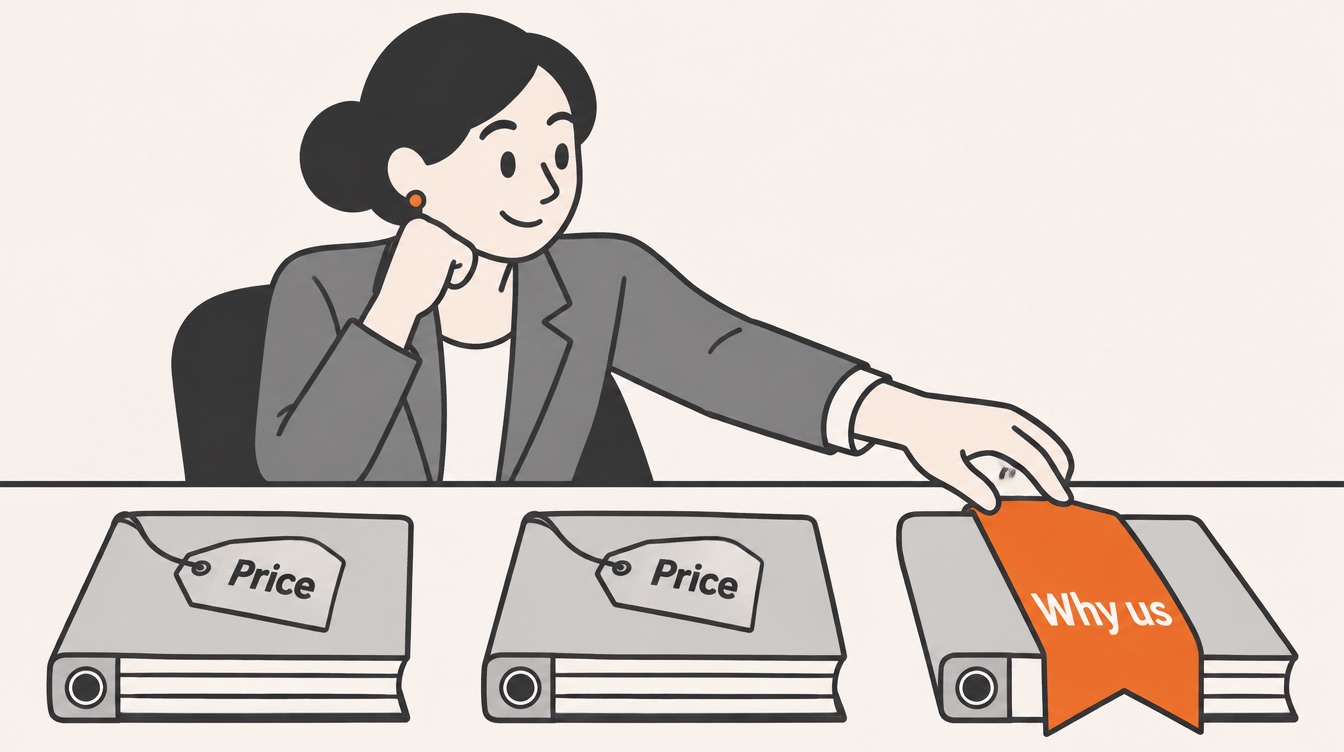
Why bids fall into a price fight
Proposals with a weak strategy tend to share a few patterns. Each one leaves the evaluator with plenty of words and no reason.
| Pattern | What the evaluator experiences |
|---|---|
| Long lists of features and past projects | Lots of capability, but no answer to "why this company for us?" |
| The position sales built before the RFP is missing | The proposal says something different from what the customer heard in meetings |
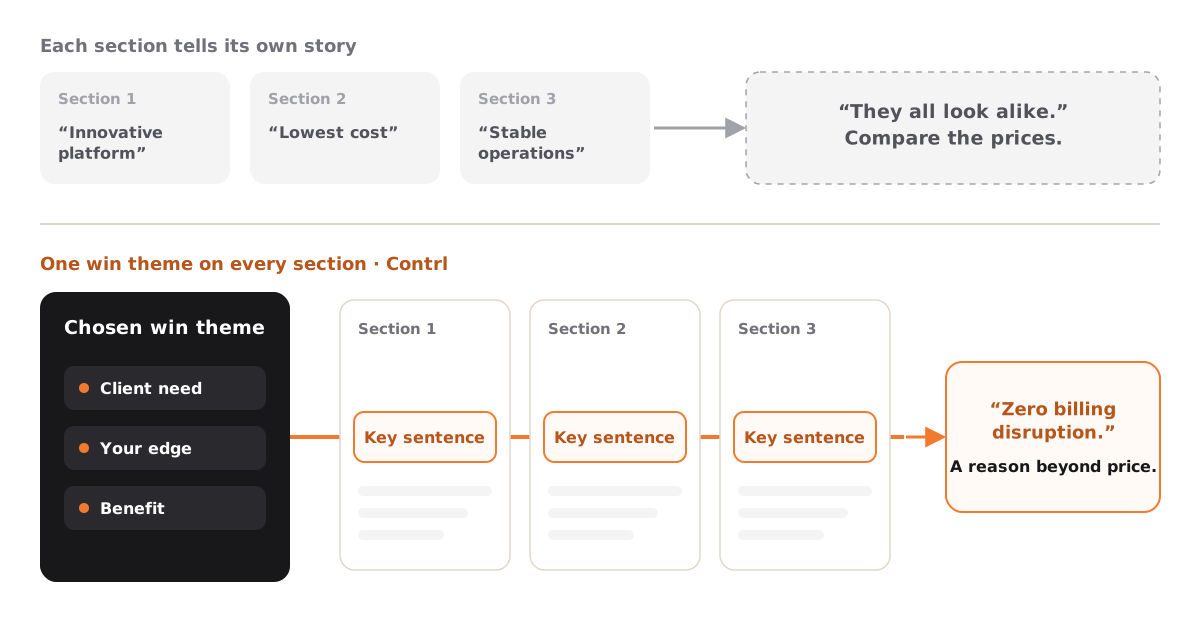
| Every chapter has its own message | Nothing adds up to one sentence the evaluator can remember |
| The biggest claims have no proof | They sound good but are hard to score |
The evaluator's reaction is predictable: "Plenty of nice words, but they all look about the same." At that point the comparison falls back to price. So what looks like a pricing problem is often a strategy problem, and the fix starts long before anyone opens the price spreadsheet.
Strategy, tactics and the chain that connects them
The Body of Knowledge defines strategy simply as a plan or method for reaching a goal, and then warns that strategy and tactics are easy to confuse. In its strict sense, your opportunity or capture strategy is your position before the competition begins: where you want to stand in the customer's mind. Tactics are what you do to put that position into practice and convey it convincingly during capture: who you meet, which partner you bring in, which proof you gather, and later which graphic and sentence carry it in the proposal. (Episode 3 has more examples.)
What this section of the Body of Knowledge adds is the chain. Capture strategy is refined as intelligence improves. Proposal strategy, your plan for writing a persuasive and winning proposal, grows out of it and must stay aligned with it. And as the work moves from capture planning into proposal development, two things are handed over:
- Capture strategies shape proposal strategies. The position you built becomes the plan for what the proposal argues.
- Win themes shape proposal themes. The messages you tested with the customer become the theme statements at the top of each section.
If the chain breaks, the customer notices. They told you what mattered in a meeting, and the proposal talks about something else. Strategy doesn't start in the document; it starts in what the customer told you.
Strategy moves with your intelligence
The Study Guide ties strategy to three assessments built during capture planning: of the customer, of the competitors and of your own capability as a bidder. They are inseparable. Each time one of those assessments is updated, the strategy and its win themes have to be checked again.
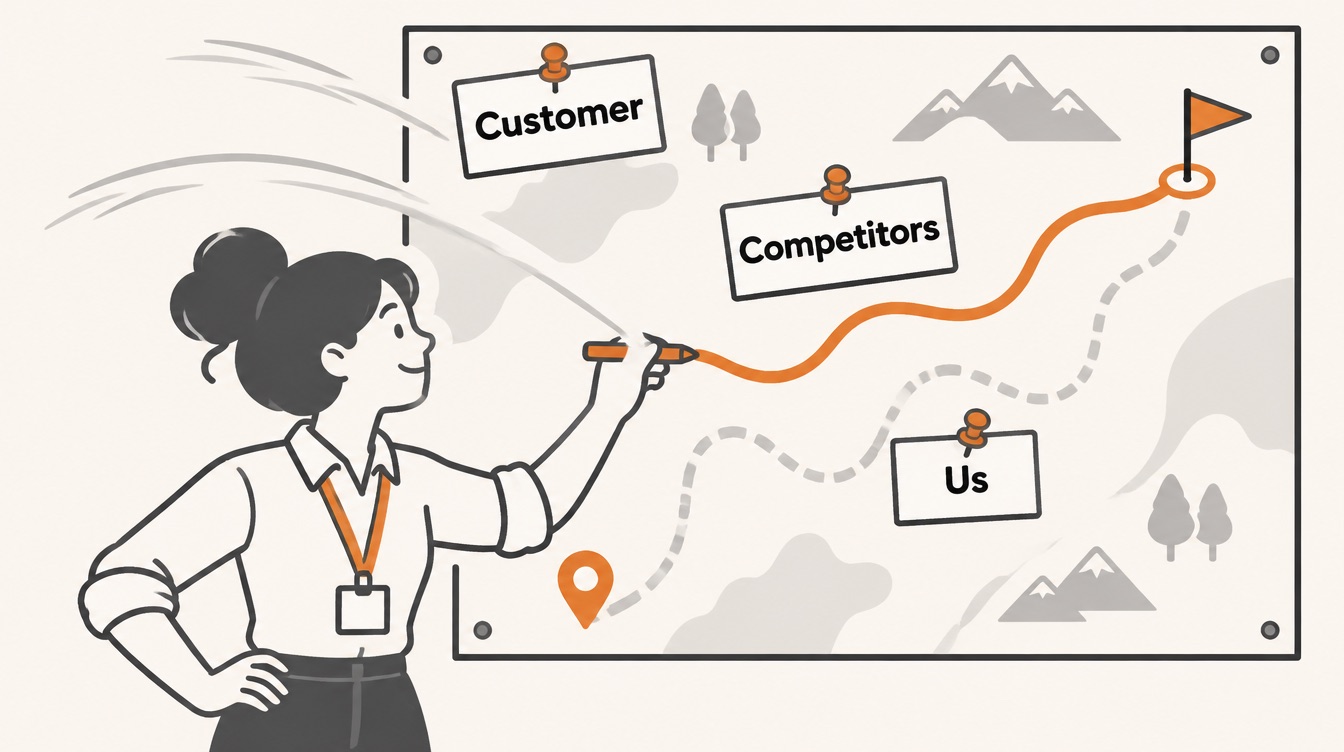
A SWOT analysis, formal or quick, supplies most of what you need to build both the capture strategy and the proposal strategy, and a bidder comparison matrix (BCM) does the same from the competitive side (Episode 5 shows both). The format matters less than the habit of updating. The Study Guide is explicit that if the requirements or the competitive field change, you should redo the BCM or SWOT and confirm your strategy statements still hold, and that during capture this may happen again and again.
A practical check: if your team has learned something important about the customer or a rival in the last month and your win themes read exactly as they did before, either the news didn't matter or the strategy has stopped being a strategy and become a fixed claim.
Start early, even if it's rough
The first best practice is to develop capture strategies and win themes as soon as your company commits to pursuing the opportunity. Bring the team together, use the BCM and SWOT to decide what specific actions will raise your probability of winning, and record those actions in a strategy statement template.
Two questions keep that session focused:
- What position do we need to hold in the customer's mind to win this?
- What do we have to start doing now to get there?
Early statements are not proposal sentences. They are instructions for the capture team: if the customer may see a gap in your capability, how will you close it? Do you need a partner? Proof the customer already trusts? At this stage the statements point to tactics, and later they point onward to win themes, proposal strategies, theme statements, trade studies and, eventually, ghosting. A rough strategy written early can be corrected many times. One written the week the RFP arrives cannot.
One unifying concept, one elevator speech
Once there are several strategies and several themes, messages start to drift. The Body of Knowledge's remedy is a unifying concept: ask the team for a word or two that sums up the opportunity strategy, pick one, make sure everyone understands it, and link every win theme back to it.
The concept matters because different positions call for different stories:
| Unifying concept | What the themes emphasize | What would undercut it |
|---|---|---|
| Innovation (challenger) | A better way of working, measurable improvement, future value | A chapter that promises to "keep everything as it is" |
| Continuity (incumbent) | Proven delivery, low risk, no disruption, known people | A chapter that proposes a sweeping redesign without explaining the transition |
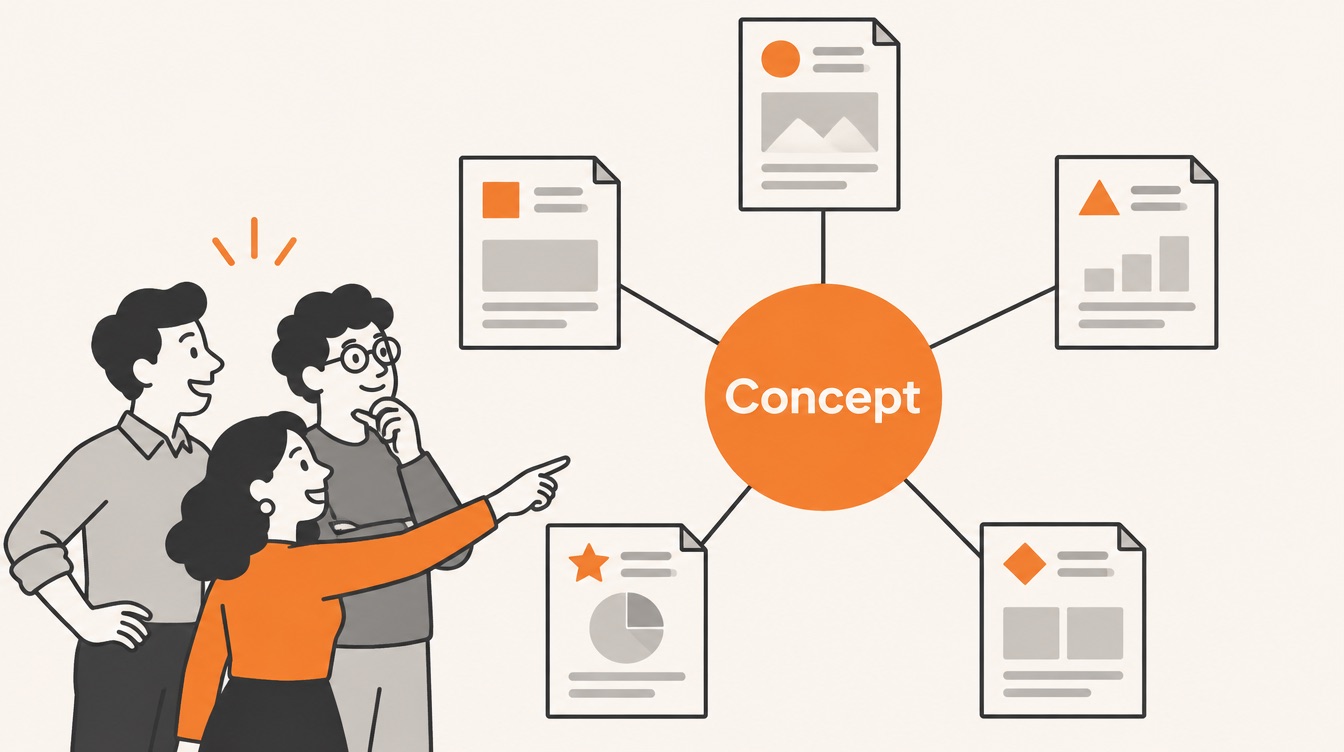
Next, expand the concept into an elevator speech: a short statement of how you will win, written down and shared with everyone working on the bid, guided by your strategy statements. Early on, it is enough that the story is unified. As you work with the customer and learn more, the speech should gain quantified benefits. A good win theme is less a clever sentence than a story that starts from one concept and grows its proof over time.
Write the strategy down: what and how
Proposal strategy statements exist so that everyone on the team can say, in the same words, how this bid will be won. The Body of Knowledge asks that effective statements carry both halves of strategy:
- The strategic part sets the position: what you will do.
- The tactical part names the specific actions: how you will do it.
A pattern that works well is to start from a line in your SWOT and finish with an action someone owns. For example, written for this article: "Because the customer fears a new supplier will disrupt its monthly billing run, we will be the lowest-disruption choice: we will run one billing cycle in parallel with the current system and name our transition lead in the proposal." One sentence says which concern you address, where you want to stand and what you will actually do.
| Part | Question it answers | In the example |
|---|---|---|
| Trigger | Which SWOT or BCM finding does this respond to? | The customer fears billing disruption |
| Strategic (what) | What position will we take? | The lowest-disruption choice |
| Tactical (how) | What specific actions get us there? | A parallel billing cycle; a named transition lead |
| Evidence | What will the customer be able to verify? | The parallel-run plan and the lead's track record |
Keep statements alive. When draft solicitation documents appear, take the feedback from your review teams and go back to the statements to refine them.
The litmus test: would it hurt if a competitor read it?
The single most useful idea in this part of the Body of Knowledge is its test for a proposal strategy. Imagine the strategy were revealed to your competitors. If that would damage your chances of winning, it is a real strategy. If a rival would shrug, it isn't.
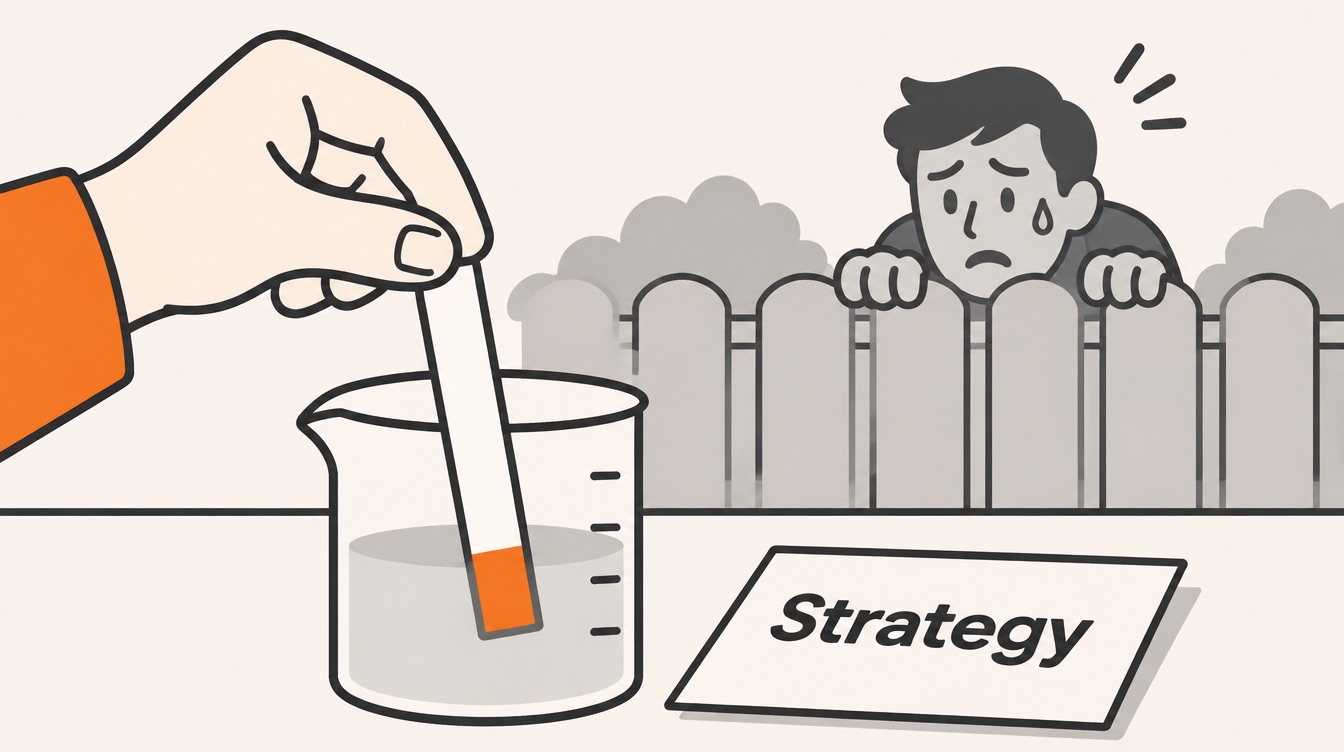
Fails the test
"We will put customer satisfaction first and deliver the project reliably."
Every bidder can say this. A rival who reads it learns nothing and loses nothing.
Passes the test
"We will win on zero billing disruption: a parallel run, a named transition lead and last year's cutover record at a comparable customer."
A rival who reads it knows exactly which ground you are taking and how hard it will be to contest.
Strategies that pass the test usually share five traits: they target a specific customer concern, they stake out a clear place in the competitive field, they rest on evidence only you can show, they can be repeated in every section, and they connect to price, technical, management and negotiation decisions. If a strategy is safe to publish, it probably won't stick with an evaluator either.
Sharpen it with reviews
Capture plan reviews and competitor reviews are where strategies get tested by people who weren't in the room when they were written. The Study Guide notes that outside reviewers bring new perspectives and sometimes new information. Occasionally that overturns the whole approach. More often it confirms the approach and makes it stronger, and these reviews frequently surface new discriminators.
A review of strategy isn't a formatting check. Useful questions are: Is this still true given what we now know? Is it a real difference in this competitive field? What would the customer accept as proof? Did anything new turn up that we should lead with?
Give every piece of evidence a home
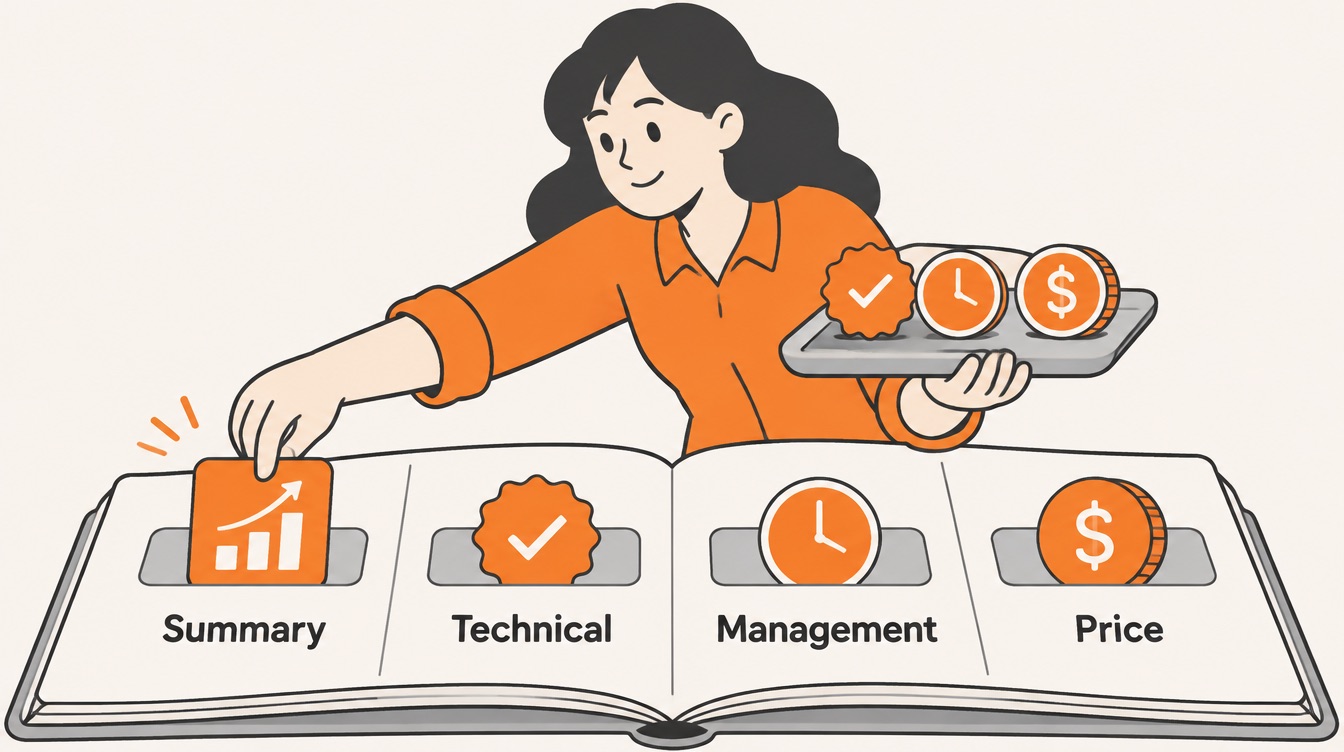
As soon as the proposal outline is developed, the Body of Knowledge asks you to assign every piece of supporting evidence your proposal strategies call for to the place in the proposal where it should appear. Writers then know, requirement by requirement, what proof their section has to carry. One common way to split it:
| Part of the proposal | Evidence it should carry |
|---|---|
| Executive summary | The reason to choose you and the headline benefits |
| Technical | Proof the solution works and how it will be implemented |
| Management | Proof of schedule control, staffing and risk management |
| Price | The value argument behind the number, not just the number |
Ghosting with independent evidence
Strategies should also cover how you will ghost the competition: shaping the customer's view of a rival's weakness without attacking the rival. Run competitive studies and gather independent evidence of what you find. Comparing your offer with the alternatives helps you quantify your benefits, and evidence validated outside your company is more convincing than your own opinion. Competitors are usually not named in a proposal for ethical reasons, but the Study Guide notes that this can change when the evidence you cite is genuinely independent.
Draw it: cover and key graphic
Unusually, the Body of Knowledge gives the proposal cover and a key graphic their own best practice. Design a customer-focused cover and a key graphic that sums up your offer and its overarching theme. The point isn't decoration. Trying to draw a strategy exposes its gaps: if you can't show the structure, the customer benefit or the difference from the alternatives in one picture, the message isn't sharp yet. A good key graphic also gives you a head start on the executive summary mock-up and helps turn capture plans into proposal plans.
Carry it through to price and negotiation
The Study Guide warns that good capture plans are not always carried into proposal plans. When that happens, a customer who has been talking to your team for months receives a proposal that doesn't match the expectations your team set, and is confused by it.
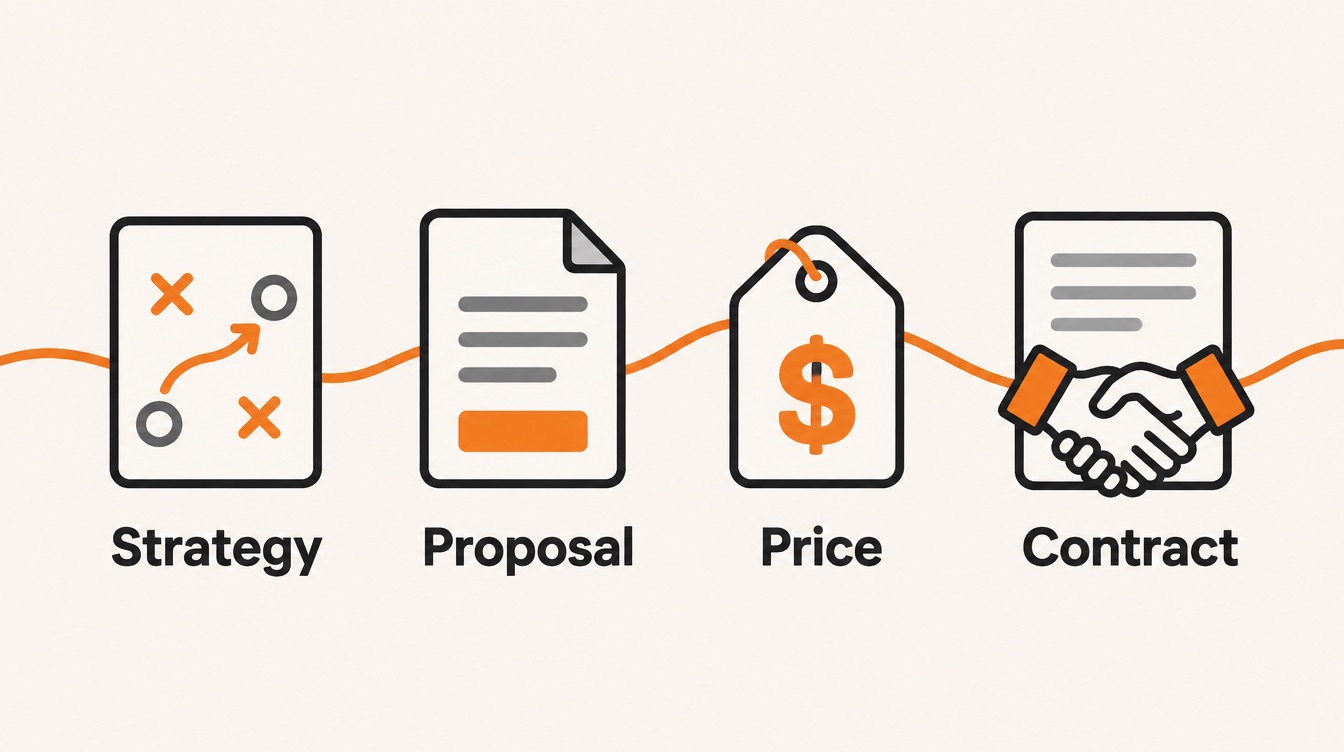
The cure is to map the strategy statements and win themes through the technical, management and price solutions and into contract negotiations. That can mean preparing a pricing strategy with three or four levels, or a plan to reduce technical scope if the price has to come down. The principle is firm: before you bid, know what you will deliver under the contract and at what price. A strategy isn't only words in a proposal; it is a decision about what you will commit to.
The same goes for teaming partners. The common pitfall the Study Guide names is bringing partners in late, which can mean they never take part in strategy development and send back generic, unsupported content. However short the schedule, the bid or proposal manager should work with every partner on the proposal strategies, the content plans where useful, and the outline.
From win themes to section themes
The last step in this competency is translation. The themes developed during capture become proposal theme statements for each major section, written around the customer and using quantified benefits wherever you can. That is where strategy finally meets the evaluator's eye: at the top of each section, in one or two sentences that say what the customer gets, why it matters and why only you can deliver it. The next episode is about writing those statements well.
Lowering the price is easy. Giving the customer a reason to choose you for something other than price is the work, and it only counts if that reason shows up on every page.
Checklist: from strategy to win themes
- Start the day you commit. Hold a strategy session with BCM and SWOT, and record actions in a strategy statement template.
- Write each statement with a what and a how, starting from a SWOT or BCM finding and ending with an owned action and the evidence it will produce.
- Pick one unifying concept by polling the team, and link every win theme to it.
- Write an elevator speech, share it, and add quantified benefits as you learn more.
- Run the litmus test on every strategy: would it hurt if a competitor read it?
- Re-check after every intelligence update, review and draft solicitation; redo the BCM or SWOT when the requirements or the field change.
- Allocate evidence to the outline as soon as it exists, and plan ghosting with independent evidence.
- Draw the cover and key graphic early, and use them to start the executive summary.
- Carry the strategy into price and negotiation, with pricing levels or scope options decided before you bid, and bring partners in early.
- Turn win themes into theme statements for each major section, with quantified customer benefits.
Where Contrl fits
A strategy only beats a price comparison if it reaches every page unchanged, and that is where most strategies get lost: each section is written separately and each tells its own story. In Contrl, the proposed win themes each name the client need, your edge and the benefit, so you can run the litmus test before choosing one. Every section then starts from a key sentence reduced from that theme, one of three candidates or your own wording, and its slides cite the RFP requirements they answer. The evaluator meets one reason to choose you, repeated with section-specific proof, instead of a different promise in each chapter.
Next in the series
Strategy reaches the evaluator in the first sentences of each section. Episode 8 covers Proposal Theme Statements: how to write the one or two sentences that connect a customer need, your solution and a quantified benefit, and why they decide what the evaluator remembers.
This article is an independent study companion based on the APMP Foundation Study Guide, version 4.2 (© 2025 APMP), which summarizes the APMP Body of Knowledge. It paraphrases and comments on that material and is not endorsed by APMP. The price-fight patterns table, the innovation and continuity comparison, the billing strategy statement and its breakdown, the litmus-test examples and the evidence allocation table were written for this article from the author's own practice. For the authoritative text and certification information, see apmp.org.