Here is this episode's question: is your win theme actually on the page?
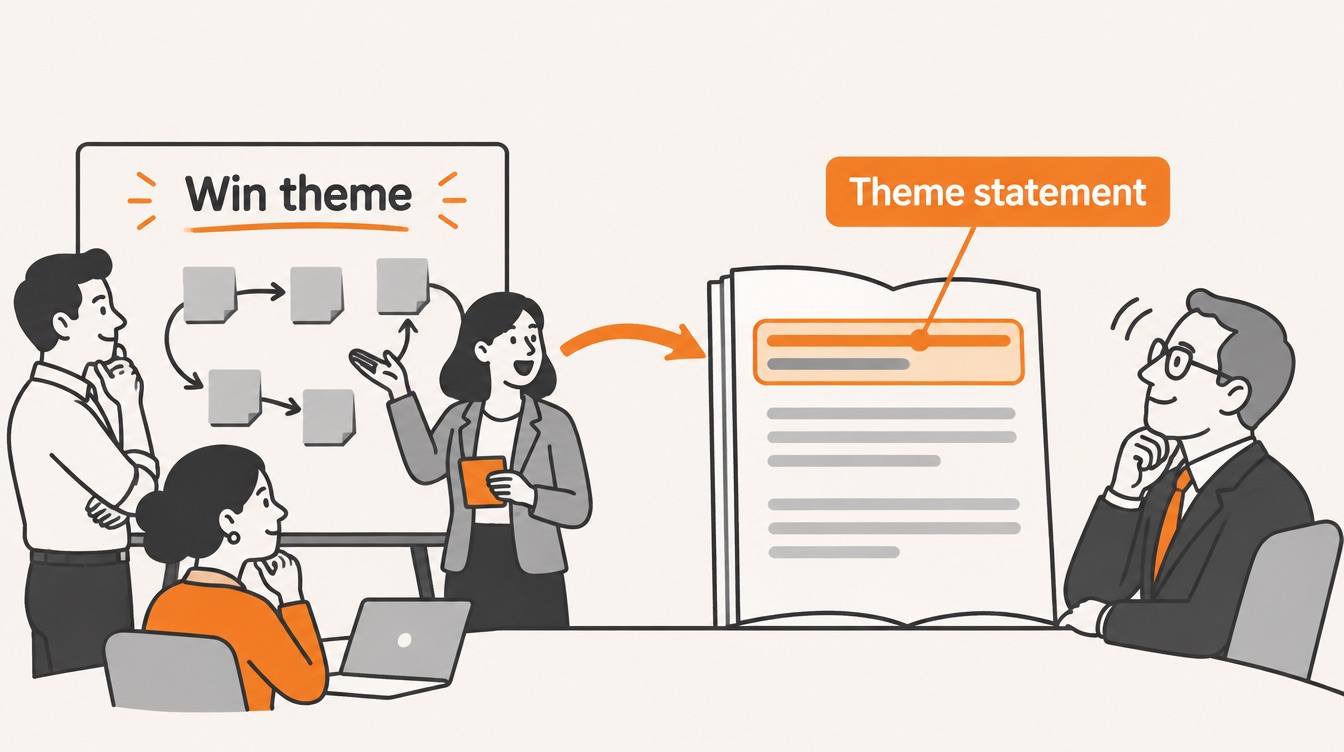
In the strategy meeting, everyone knows why the customer should pick you. The evaluator was never in that meeting. All they see is the document, and if the reason to choose you is not written in it, in a sentence they can find and repeat, it does not exist for them. The tool for getting it onto the page is the theme statement: one sentence that tells the evaluator why to select you, by linking a need the customer cares about to a feature only you offer and a benefit they can measure, with proof to back it.
This series works through the APMP Body of Knowledge as summarized in the APMP Foundation Study Guide. Theme statements sit under Focus on the Customer, right after strategy and win themes. Put simply, this episode is about turning a strategy into a sentence an evaluator can score.
What a theme statement is
The Body of Knowledge defines a theme statement by its job: it gives the reader a reason to choose you. To do that, it connects the customer's most important needs to the features of your offer that set you apart and to the benefits those features produce, quantified where possible.
A compact way to remember it:
Theme statement = customer need + discriminating feature + quantified benefit, backed by proof.
Two clarifications from the Study Guide keep the idea from drifting:
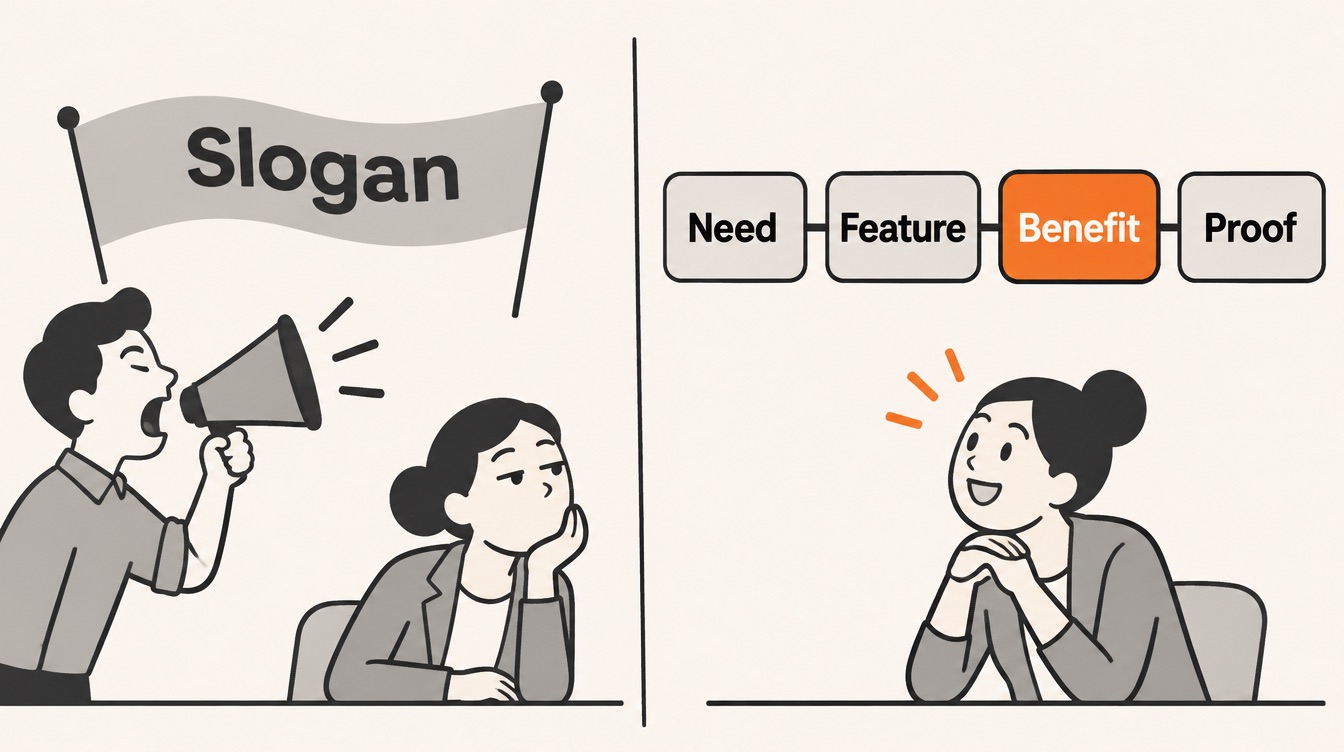
- It is not a slogan. Marketing taglines and catchy phrases are not theme statements. A theme statement is specific: it ties one discriminator to one need that matters to this customer.
- It is said, not done. Strategy describes the actions your team will take to win. A theme statement is what the proposal will say. One belongs in the capture plan; the other belongs in the document.
Because theme statements carry the points you most want the evaluator to remember, they appear in section openings, paragraphs and headings, and are often set apart in callout boxes.
Strategy, win theme, theme statement
These three terms get mixed up constantly. The difference is mostly one of level and audience:
| Strategy | Win theme | Theme statement | |
|---|---|---|---|
| Question it answers | What will we do to win? | Why should the customer choose us, overall? | What does this part of the proposal tell the evaluator? |
| Who reads it | The bid team | The bid team, then everyone writing | The evaluator |
| Scope | The whole pursuit | The whole proposal | One section, heading or callout |
| Example | Team with a local partner; propose phased rollout | The only bidder that can go live without disrupting field offices | A sentence written for, say, the transition section (see below) |
A win theme that never turns into theme statements stays in the meeting room. Every section needs its own version of it, worded for what that section is about.
Slogan or theme statement?
Compare two sentences written for this article. The first is the kind that fills countless proposals:
Slogan
"With our outstanding technology and rich experience, we will deliver the project reliably."
No customer issue, no discriminator, no measurable benefit. Any bidder could sign it.
Theme statement
"Your field offices keep working through the switchover, because we migrate one region per weekend, the method we used to move 14 offices last year without a day of downtime."
Customer issue (no disruption), discriminator (region-by-region weekend migration), proof (a dated, countable track record).
The four things a strong statement contains
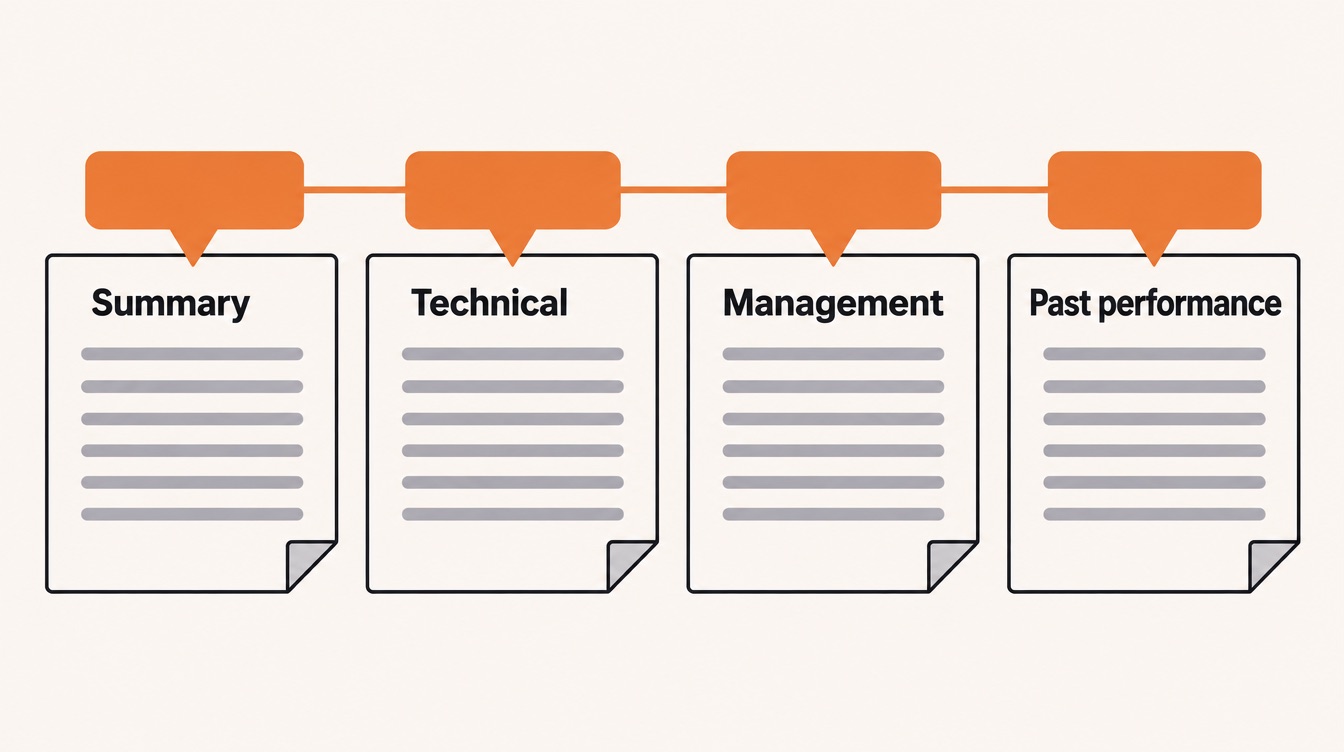
When you draft a theme statement for any level of the outline, starting with the top ones such as company qualifications, technical approach and past performance, the Body of Knowledge asks it to do four things:
- Name a benefit to the customer that comes from a feature you offer.
- Tie that benefit to a customer issue, ideally a hot button the customer has expressed.
- Quantify the benefit whenever you can.
- Point to your past success with that feature, benefit or issue.
Notice where the feature sits. It is the reason the benefit happens, not the headline. Evaluators do not award points for owning a tool or a method; they award them for what it does for the customer and for evidence that you can deliver it. That is why the best statements usually lead with the benefit and let the feature explain it.
Themes also don't appear from nowhere. The Study Guide says they should flow from the opportunity and capture strategy, reflecting the win themes, the customer's hot buttons, and the features, benefits and discriminators you have identified. A useful habit is to sketch a top-level outline early, from a draft RFP or a similar past one from the same customer, and pair features with benefits against it before the real RFP arrives.
Quantify, but believably
Statements with a quantified benefit tend to be more credible and more persuasive than general promises. "Reduce processing costs" points in a direction; "reduce processing costs by about a quarter" gives the evaluator something to hold. Numbers come with conditions, though:
- They must be supportable. Put the evidence soon after the claim. If you can't back it up, rewrite the statement rather than keep the number.
- Agree them with the customer when you can. A customer who helped estimate the benefit trusts the result more.
- Avoid both extremes. A round figure may be read as an approximation with a wide margin. A figure to the decimal point can make evaluators question how it was calculated. An unrounded whole number sits in between.
| Version (written for this article) | How an evaluator may read it |
|---|---|
| "Shorten permit processing with our online intake." | Direction only. How much shorter? Compared with what? |
| "Shorten permit processing by 30 percent with our online intake." | Better, but a round number can sound like an estimate. |
| "Shorten permit processing by 27 percent with our online intake." | Reads as measured. The evaluator expects to see where it comes from, so show it. |
| "Shorten permit processing by 27.36 percent with our online intake." | Too precise to be believed without the full calculation. |
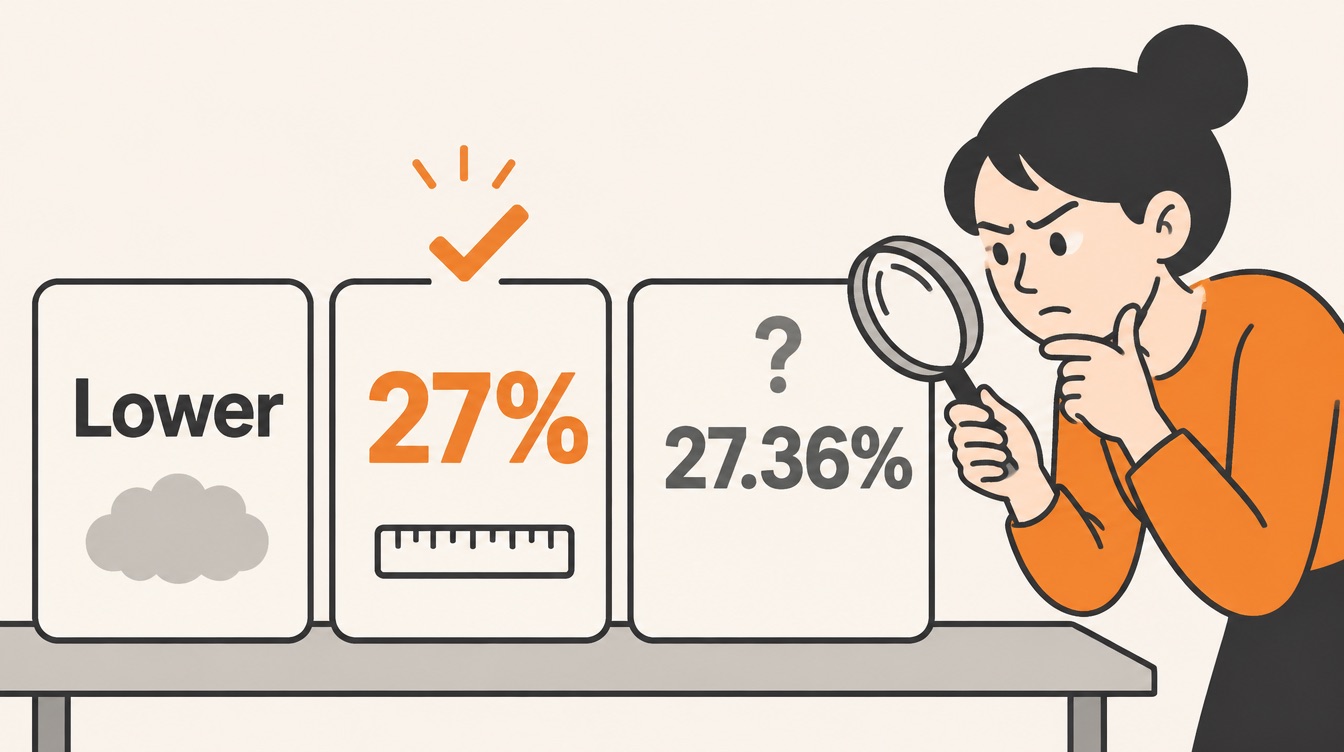
Quantifying is not inventing. It is expressing a benefit you can prove at a level of precision the evaluator will believe.
Make it short: one sentence, benefit first
Good theme statements work like sound bites: if the evaluator had to explain the decision in one line, it would be yours. Length works against you. The longer the sentence, the more likely it gets skipped. The Study Guide's editing approach comes down to three moves: keep the one benefit that matters most, swap jargon for plain words, and put the customer's benefit at the front.
Here is that sequence on an example written for this article, for an IT help desk bid:
- First draft: "Leveraging our integrated ITSM framework, proven best practices and AI-assisted knowledge management, our service desk delivers enhanced first-contact resolution for end users." Three features, one vague benefit, and every rival claims the first two.
- Keep one benefit and its real cause: "Our knowledge base, already tuned on 12 similar agencies, raises first-contact resolution."
- Cut the jargon: "Because our agents work from answers already tested at 12 similar agencies, most problems get fixed on the first call."
- Benefit first: "Your staff get most problems fixed on the first call, because our agents work from answers already tested at 12 similar agencies."
The last version is shorter than the first, says something only this bidder can say, and starts with what the customer gets.
Build it in four boxes first
Writing the perfect sentence from a blank page is hard. It is easier to fill in the parts and then join them. The Study Guide offers a fill-in-the-blanks pattern, which in my paraphrase reads:
[Customer] can [improve what], [by how much or by when], because of [discriminating feature], [proof].
It also suggests brainstorming in four columns before writing anything. Here is the transition example from earlier, laid out that way:
| Customer issue / hot button | Feature | Benefit | Proof |
|---|---|---|---|
| In the customer's words: "We can't have offices go dark during the changeover." | Which of your features fixes it? Region-by-region weekend migration with a rollback plan. | One high-level benefit, quantified if possible: no lost working days in any office. | A named, dated success: 14 offices moved last year with zero downtime. |
Two rules keep this from producing a paragraph instead of a sentence. Keep the feature column short rather than detailed, and merge the benefits into a single high-level one. Then turn the four boxes into one grammatical sentence that makes the line from solution to benefit obvious.
Test it: out loud, then against two questions
Read it out loud
A sentence that looks fine on screen often fails when spoken. After drafting, read each statement aloud and check:
- Breath: did you need one before the end? Then it is too long.
- Flow: did you stumble or restart? Use fewer or simpler words.
- Voice: would a normal person say this? Prefer plain, short, declarative sentences.
- Belief: does it sound credible? Phrases like "world-class" or "unmatched expertise" need proof inside the statement, and very round numbers may need the working shown.
The two-question test
The Body of Knowledge's litmus test is the one to keep on a sticky note:
- Could a rival credibly claim the same thing? You want no. If yes, add the detail that sets your solution apart.
- Could an evaluator paste this sentence into the evaluation form to justify your top score? You want yes. This one is more subjective, but it is the real goal: you are writing the evaluator's justification for them.
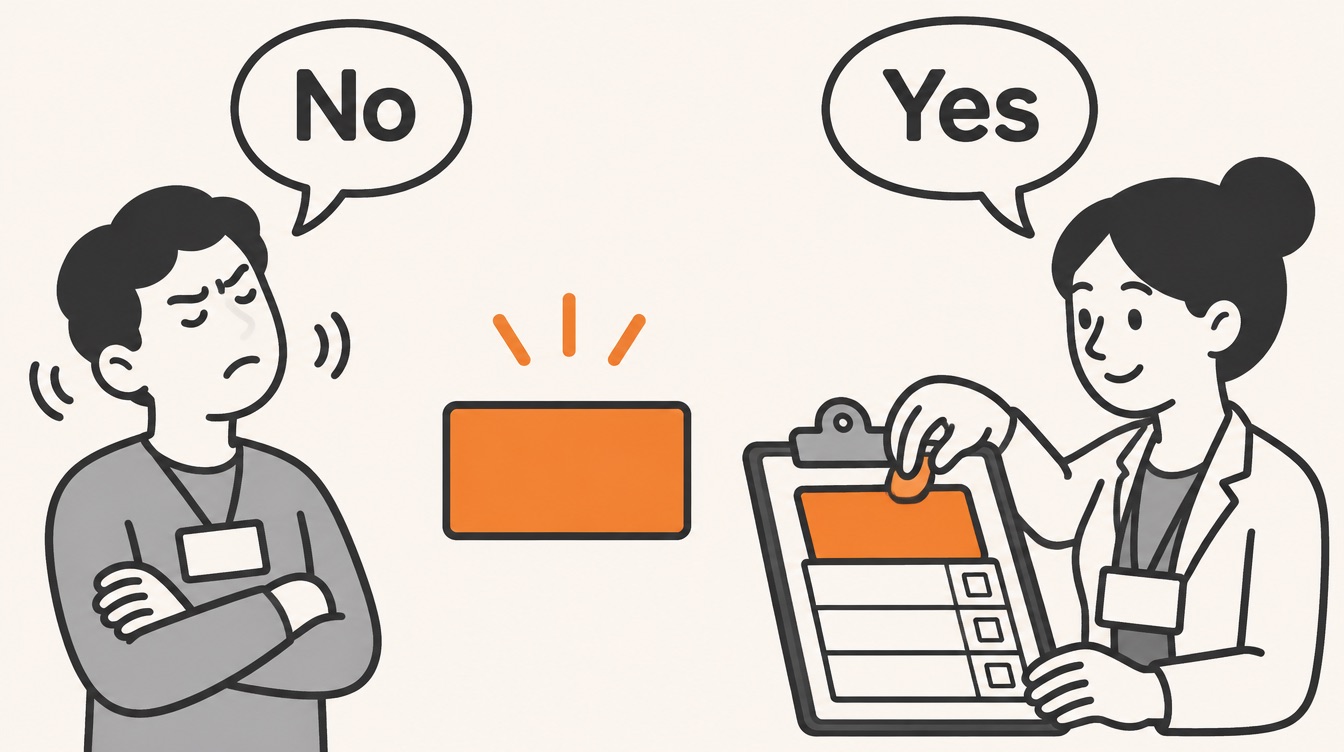
Run the slogan from earlier through it. Could a competitor say "outstanding technology and rich experience"? Easily. Could an evaluator justify a top score with it? No. Rewrite.
Plan themes on the outline, before anyone writes
Theme statements are not a polish applied at the end. Once the top levels of the response outline exist, the Study Guide recommends flowing the related themes into each section so the message and the benefits stay connected across the whole response. This builds a theme outline.
Drafted for a typical structure, it might look like this:
| Section | What its theme statement should carry |
|---|---|
| Executive summary | The main reason to choose you and the headline benefit |
| Technical approach | How a specific feature solves a named customer issue |
| Management approach | Benefits for schedule, risk and day-to-day operation |
| Past performance | The proof: comparable work and its results |
Doing this early has two payoffs. First, it exposes gaps: places where you need a trade study, test results from subject matter experts, staffing data from HR, or input from partners, vendors or subcontractors to show a benefit. Start gathering that before the RFP is released. Second, once the themes are aligned, you can add a draft theme statement to every section of the content plan, so every writer organizes their section around the larger strategy instead of starting from a blank page.
Place them consistently
Evaluators learn your pattern. If good theme statements appear at the same level throughout, an efficient evaluator will look for them first, even before reading the section. Inconsistent placement confuses or irritates them, and statements styled differently from one another (font, color, size, design) can simply be missed, along with the points they might have earned.
Where to put them is a matter of practice, not doctrine. The Body of Knowledge lists four approaches in use, each favored in different markets. The trade-offs below are my reading:
| Approach | Works well when | Watch out for |
|---|---|---|
| One statement at the start of each section, at the same heading level | Evaluators score section by section | Long sections where the theme fades by page three |
| A statement wherever a major discriminator is discussed | Your strengths are spread across the document | Uneven density; some sections may get none |
| A box of several statements at the start of each major section | Evaluators skim openings before reading | The box turning into a list nobody reads |
| One statement at the top of every page | Page-based formats such as slide proposals, read quickly | Repetition and weak filler statements |
Choose based on how the proposal will be evaluated, then apply it everywhere in the same format. And keep perspective: the Study Guide is clear that focused, persuasive content matters far more than how many theme statements you have or exactly where they sit.
Common pitfalls
- Writing sections before the themes are set and reviewed. The content and the themes drift apart, and fixing it late means rewriting.
- Too little proof. Evaluators won't believe a theme without enough quantifiable, verifiable evidence behind it.
- Features instead of benefits. A list of what you have does not tell the customer what they gain.
- Talking about yourself. A statement whose subject is always "we" usually isn't focused on the customer. Make the customer the subject where you can.
Checklist for your next proposal
- Start from the win theme and the customer's hot buttons, not from a blank page.
- Draft a theme outline on the top levels of the response outline, one theme per section.
- Fill the four boxes for each: customer issue, feature, benefit, proof.
- Write one sentence, benefit first, one discriminator, no jargon.
- Quantify only what you can support, and place the evidence right after.
- Read it aloud and cut until it fits in one breath and sounds believable.
- Run the two questions: a competitor can't say it; an evaluator can score with it.
- Put it in the content plan so writers build their sections around it.
- Pick one placement approach that fits the evaluation, and format every statement the same way.
Where Contrl fits
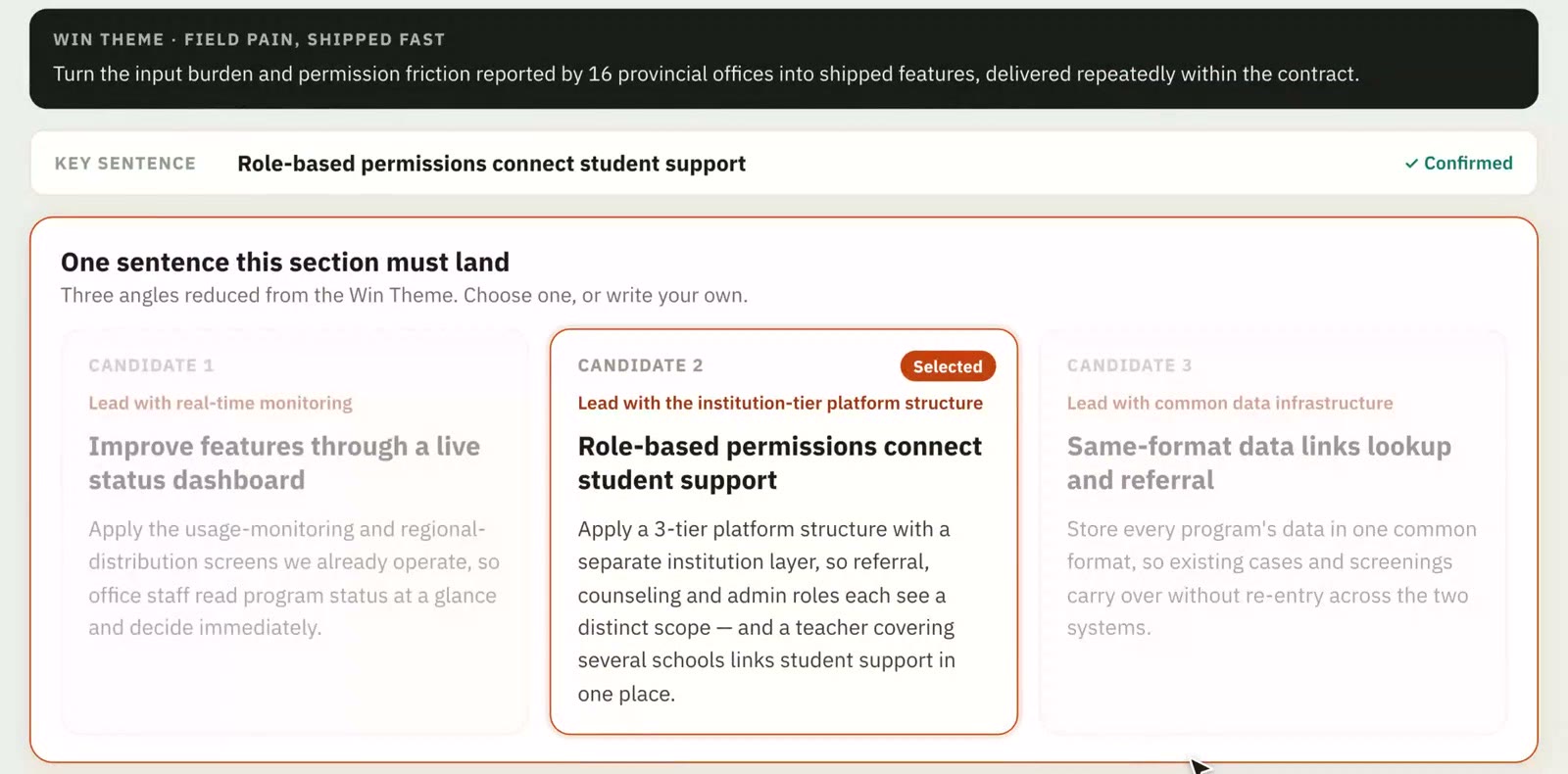
The Body of Knowledge's advice to set themes before anyone writes is built into how Contrl works. After you choose a win theme, each section of the proposal starts with one sentence it must land: Contrl offers three candidates, each reduced from that win theme from a different angle, and you pick one or write your own. Only then are the section's slides written, so every page in that section is built around a sentence an evaluator could carry into the score sheet.
Next in the series
A theme statement is only as strong as its parts. Episode 9 covers Features, Benefits and Discriminators: how a feature becomes value to the customer, and how a difference becomes points on the score sheet.
This article is an independent study companion based on the APMP Foundation Study Guide, version 4.2 (© 2025 APMP), which summarizes the APMP Body of Knowledge. It paraphrases and comments on that material and is not endorsed by APMP. The slogan and transition examples, the permit-processing figures, the help desk editing sequence, the four-box example, the theme outline table and the placement trade-offs were written for this article. For the authoritative text and certification information, see apmp.org.